Future by Diversity: women learn from experienced role models
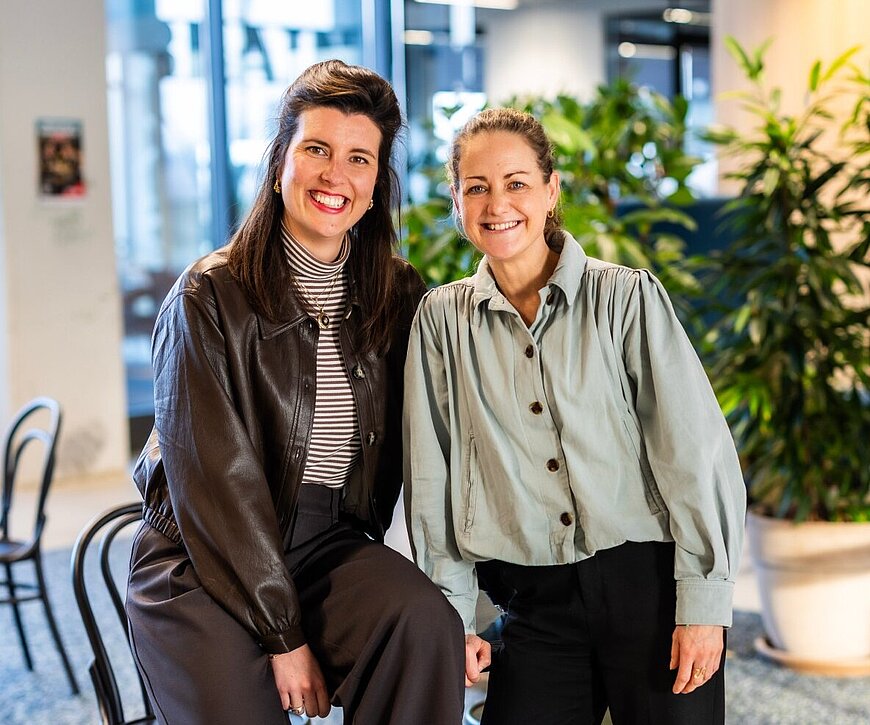
Greater diversity in teams leads to more innovation and ultimately more economic and social growth within the Brainport region. It was with this conviction that Future by Diversity was founded. A new initiative that connects women with experienced role models. Brainport Development supports this initiative. Astrid van Deelen (manager of the Education & Labour Market team at Brainport Development) and initiator and innovation entrepreneur Lotte Geertsen explain. “It's not about giving preferential treatment, but about levelling the playing field.”
When Astrid van Deelen joined Brainport Development twenty years ago, the region was much less diverse. ‘I found myself in environments dominated by technology and, above all, white men. Sometimes I was automatically asked to pour the coffee. I really had to call that out.’ The female director at the time was an example to her. “Without her, I don't think I would have seen what was possible. It shows how important female role models are.” She wholeheartedly endorses the importance of Future by Diversity. “Especially when I look at my daughters, aged ten and eleven. I want them to experience equal opportunities.”
Lotte can relate to that motivation. Shortly after the birth of her second child, a daughter, she felt very strongly: “I am now your role model.” She decided to leave the company where she worked and continue as an entrepreneur. “Exciting? Definitely. But I don't regret it for a moment.” That drive also led to the creation of Future by Diversity, which she founded together with other entrepreneurial women. “We want to achieve something positive and concrete.”
Women with flying hours
Within the broad theme of diversity, this initiative takes on a concrete/action-oriented role. 'We have initially chosen to focus on women, because there is still much to be gained in this area. Women with issues surrounding growth, ambition and leadership are supported for five months by a Dutch- or English-speaking role model with extensive experience.“ The mentors and mentees meet one-on-one. 'But we are also building a community through targeted meetings and company visits.”
Lotte continues: ‘Beforehand, we were told: good luck finding those female mentors. But we spoke to seventy mentors. Each and every one of them is a fantastic role model who wants to give something back to this region. How fantastic is that?’ There is also a lot of interest on the mentee side: there were more than fifty applications for the first edition, with a remarkably broad spread. “Not only young women, but also women between the ages of forty and fifty who say: ‘Now it's my turn.’”

Remaining authentic
The issues women bring to us are very diverse: from questions about ambitions and leadership to entrepreneurship or (further) growth. “What we mainly want to show with the programme is how to remain authentic in what can sometimes be a masculine environment,” says Lotte. “At the beginning of my career, I developed my masculine qualities more than my feminine qualities. Now I see that both are acceptable and that it actually makes organisations stronger. But to see how you do that, you need examples. It helps enormously to spar with women who have already walked the path.”
Future by Diversity fits in well with Brainport Development's agenda, which is why we support it. Astrid: "We invest heavily in training and attracting talent in the Brainport region. But one in five new entrants leaves the technology sector within three to five years. We have a leak. Retention is at least as important as recruitment. If you look at the reasons behind this, it is often the case that people do not feel at home in the sector. This may be due to the corporate culture, a lack of flexibility or traditional ideas about work and care'. The two point out that care tasks often still fall to women. At that very moment, Lotte receives a call from her daughter's nursery asking her to pick up her child because she is ill. “Who gets called first?” she asks. “If organisations don't recognise this and don't adapt, you lose talent.” Incidentally, Lotte deliberately ignores the call. “Then they'll call my husband; we've divided the care responsibilities equally.”
Accelerating change
Initiatives such as Future by Diversity draw attention to the importance of diversity and inclusion and clarify what the business community can do. The women recognise that change does not happen overnight. Astrid: “Change takes time. In the Netherlands, we often work with programmes that last a few years, then stop and are followed by the next initiative. That can be frustrating to see. If you want to make fundamental change, more is needed.”
Future
How do they view the future? Astrid: “In five years” time, we will see a true reflection of society, with women represented in boards, companies and networks!
Want to know more?
More information can be found on the website www.futurebydiversity.nl.