Forget about the generation, look at the stage of life
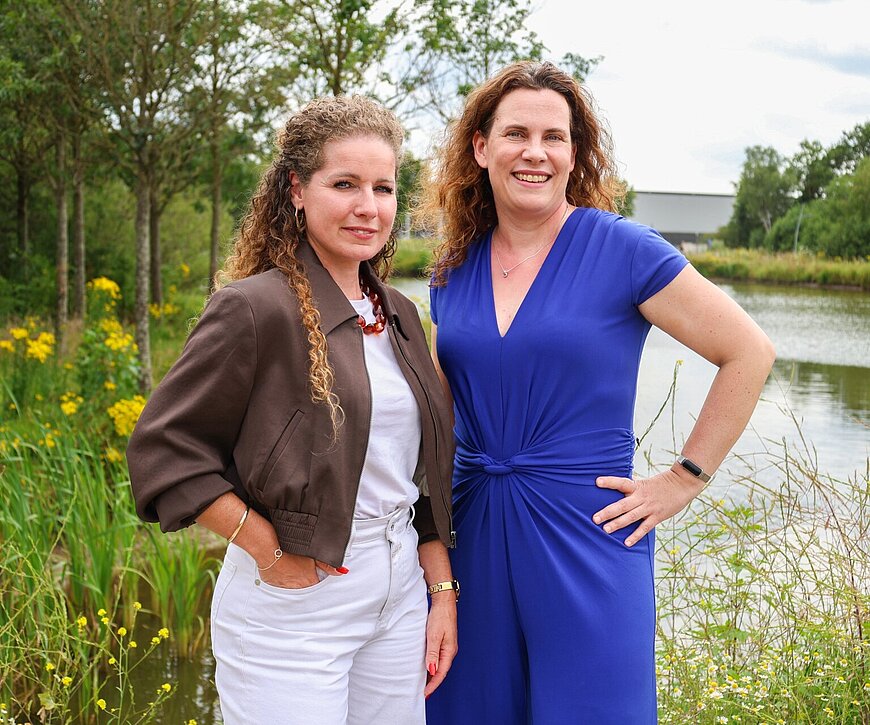

The labour market is tight, so SMEs are increasing salaries, extending leave entitlements and changing working hours. And yet people are still leaving. Or they stay, but lack job satisfaction. During the KOP knowledge session ‘Retaining talent with an awareness of life stages’, it became clear that the key lies elsewhere: in knowing what an employee needs at this particular moment in their life. Fontys researcher Ellen Koop led the session, which was organised by Werkcentrum Zuidoost-Brabant, Brainport Development and the Kempisch Ondernemers Platform (KOP). Ellen, together with Lieke van Schijndel from KOP, explains why talent retention does not start with a scheme, but with a conversation.
Why is the issue of talent retention such a pressing concern for KOP members at the moment? According to Lieke van Schijndel, KOP programme manager for the labour market and talent development, this is mainly down to what companies are currently experiencing in the labour market. ‘Companies feel the urgency to change, partly due to labour shortages. It is becoming increasingly important to retain staff and attract new talent. I therefore expect strategic HR policy to play an ever-greater role.’
Consider the stage of life
SMEs are now well aware that attracting talent is important. But exactly how to go about it remains a challenge. During the knowledge session, it became clear that many companies’ first instinct is to tweak their employment conditions. But before you can offer anything, you need to know what someone actually needs. One question that arose among employers during the knowledge session was: what do we actually know about what our employees really need to continue enjoying working for us? And that, according to Ellen Koop, a researcher at the Fontys Research Group on Dynamic Talent Interventions, is where things often go wrong. ‘Forget the generation; look at the stage of life. If, for example, you look at the average scores for work-related characteristics such as enthusiasm, motivation and job satisfaction, you’ll see that they differ little or not at all. A 25-year-old and a 45-year-old might well have the same needs, whilst those of two people in their thirties might actually differ considerably.’
Anyone who formulates policy based on year of birth thus misses the differences that really matter. Ellen: ‘When I was teaching a group of students, I asked them who wanted to start out as a self-employed person. I expected at least half to put their hands up, but virtually everyone wanted a permanent job. Because they need a mortgage and security. By making assumptions that young people won’t stick around for long or that older employees don’t want to keep learning, you’re creating a problem yourself.’

Feeling seen and heard
Lieke: ‘Don’t focus on someone’s age, but on major, significant life events. It is precisely those moments that influence what someone needs. Think of buying a house or moving house, or providing informal care. Perhaps, as an employer, you could offer a bit more flexibility during those defining moments. Or strike up a conversation: is there anything we can help you with? If you take those kinds of life events as your starting point, you’ll naturally be taking the first step towards a people-centred policy. Feeling seen and heard is important for everyone. More important than how trendy the office is or how good the terms of employment are.’
The meaningful conversation
In this regard, having a meaningful conversation is of great importance. And that can sometimes be quite tricky. ‘You see that many managers have progressed to this role because they were the best in their field in terms of subject matter. But that doesn’t necessarily mean they’re also the best at having conversations; that requires a different set of skills,’ says Lieke. There are ways to support managers in this and offer them tools, such as knowledge sessions and training courses on personal leadership. ‘This helps them gain a better understanding of themselves and to recognise what questions they can ask their staff. As a result, they find it easier to have meaningful conversations.’
Holding on by letting go
Ellen experienced the added value of such a conversation first-hand. ‘As a young mother, people at work assumed I wanted to take things easier and had less need for challenging tasks. Until, after a few years, my manager made a comment during a meeting. He said: “You don’t want to take things easier; you’re always looking for a new challenge. I can retain you by giving you as much freedom as possible.” And that was true, but nobody had ever looked at it that way before. By asking further questions, greater insight emerged.’ An example that resonated with several attendees during the knowledge-sharing session. It also inspired one participant to hold a discussion with five colleagues within a few weeks about their personal circumstances and needs.
But letting go can be nerve-wracking for an employer. Yet it often works in retaining talent, says Ellen. ‘That’s why hybrid teaching appeals to me so much, for example: you work one day a week in education. You gain experience beyond your own organisation and discover new worlds. That boosts motivation and efficiency. And it’s precisely those motivated staff members you can more easily do without for a while.’
Test your assumption
Talent retention doesn’t start with a scheme, but with the question of what someone needs. Lieke: ‘The first step is to raise awareness, but that’s not the end of it. The approach within the business world needs to change. By taking a closer look at talent retention and developing policies based on life stages, you’ll see lower staff turnover, greater engagement and, above all, happier employees.’ Ellen concludes with a simple piece of advice: ‘Don’t rely on your own assumptions; test them by asking your employees!’
Would you like to find out more about retaining talent? Or do you need advice on HR matters? Please get in touch with Natasja Muskens (employer adviser at Werkcentrum Zuidoost-Brabant) or Marloes van Dorst (labour market coach at Techniekcoalitie).