Work satisfaction and practical expertise through hybrid teachers
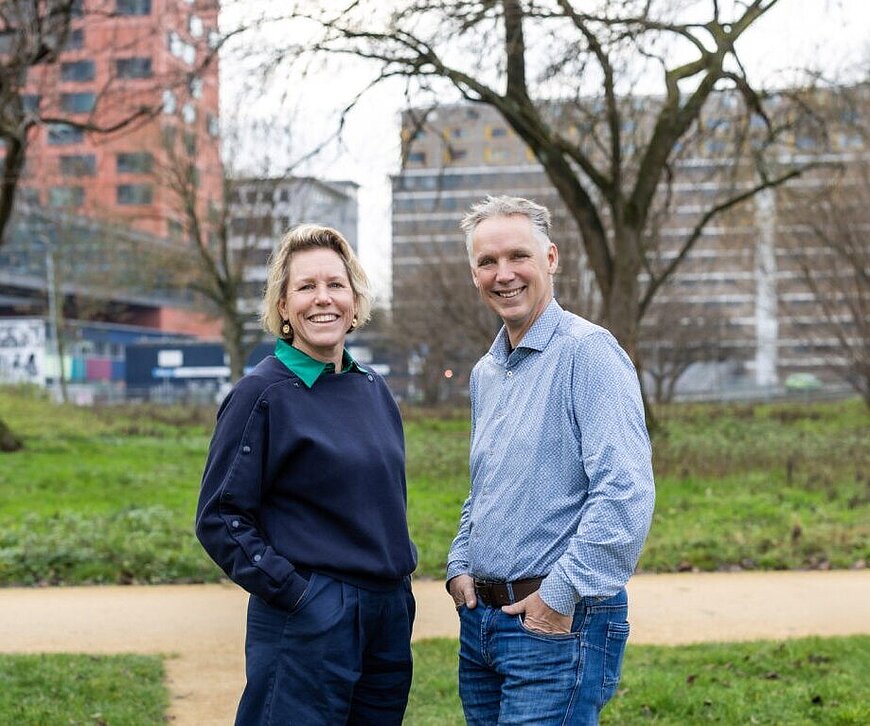

“What we do is basically a kind of Tinder.” Henk Versluis and Simone van der Velde laugh when they say it, but it is true. Their work revolves around one core idea: matching the right professional from industry with the right place in education. Whether that is primary or secondary school, vocational education, higher professional education or university. “We want to strengthen technical education and give people the opportunity to contribute to society.”
Anyone who experiences hybrid teaching up close quickly understands why it works. “Education and industry are two very different worlds,” says Henk. “By bringing a hybrid teacher into a school, you immediately bring in up-to-date practical knowledge, without the school having to figure everything out on its own.” Simone gives an example from secondary education. At one school, expensive CNC machines had been purchased using STO funding. “But everyday reality takes over,” she says. “Everything keeps moving, and those machines were standing idle.” When this was raised, a solution emerged: a hybrid teacher who knew the machines from practice and actively engaged students in working with them. “Said and done.”
One day per week
In the Brainport region, hybrid teaching is clearly structured. “Within this project, it involves a maximum of one day per week in the classroom,” Henk explains. “That makes it feasible for schools, companies and employees. And it means you can teach without having to obtain a formal teaching qualification.”

Social contribution
What motivates professionals to step into education alongside their regular jobs? Henk does not hesitate. “Social engagement. My very first match was at SintLucas during the COVID period. A chemistry teacher dropped out. Two days later, someone from industry was teaching online. He did that for several years because he wanted to help.” Simone agrees: “People want to make a social contribution. To step out of their routine or their bubble.” For schools, this delivers more than just extra hands. Students receive more attention and gain up-to-date knowledge. “But,” Simone emphasises, “someone from industry does not automatically have teaching skills. Schools also need to invest in this new colleague.” When everything is set up properly, however, it works – they know that by now.
Work satisfaction
Companies benefit as well. “Hybrid teaching leads to greater work satisfaction,” says Henk. “Employees gain new energy, and companies show that they are socially engaged.” In addition, education is a place where future talent is present. “For some companies, being visible in schools is valuable. You can find tomorrow’s top talent there.”
275 successful matches
Over five years, around 275 successful matches have been made. “We are proud of that.” What could still be improved? “Maintaining warm, personal contact remains important,” says Simone. “Not only to see whether someone is growing and in the right place, but also to keep hybrid teaching visible within schools. That is something we want to invest in even more in the future.”
For organisations or professionals who want to get started, the threshold is low. “Get in touch with us,” says Henk. “Via project leader Leane van Veghel: l.vanveghel@brainportdevelopment.nl. After an initial conversation, we can often move quickly.”