Webinar review: from traffic control centre to vehicle, where will control lie in future?
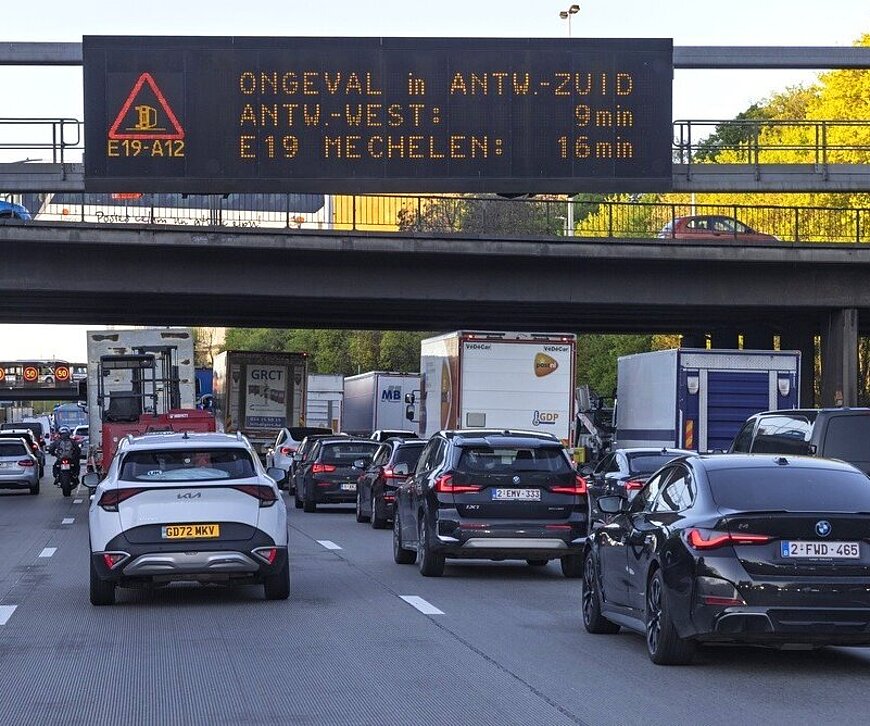

During the second webinar and sounding board session organised by the CCAM Proving Region, participants discussed how traffic information and traffic management are changing as vehicles become increasingly capable of perceiving their surroundings and making decisions independently. The future role of public authorities, vehicle manufacturers and digital infrastructure was also addressed.
On 14 October 2026, the CCAM Proving Region (CPR) brought together companies, researchers and other stakeholders for a webinar and sounding board session on digital road infrastructure. Bart Lowyck from imec presented his vision of the changing role of digital infrastructure in a future with automated vehicles. The 27 participants contributed their ideas on collaboration between vehicles, public authorities and businesses, and the opportunities for testing new applications in practice.
An evolving role for digital road infrastructure
As vehicles become increasingly capable of perceiving their surroundings and making decisions for themselves, the role of digital road infrastructure is also changing. Whilst traffic information and traffic management have traditionally relied heavily on roadside systems and traffic control centres, some of that intelligence may shift to vehicles and digital platforms.
This does not mean that infrastructure will become redundant. Automated vehicles must be able to operate safely and independently, but can also benefit from up-to-date information on, for example, traffic lights, roadworks and changing traffic conditions.
The future of existing communication systems (C-ITS) was also discussed. These systems provide a basis for data exchange between vehicles and infrastructure, but need to be further developed to better meet the information needs of automated vehicles.

Input from the sounding board session
Participants contributed their ideas on the future of digital road infrastructure, focusing on six topics. Discussions centred on where control over automated driving should lie, how existing communication systems can be further developed, and what responsibilities public authorities and the automotive industry have in this regard. The session also addressed whether the industry is already ready for this collaboration and which applications can be tested within the CCAM Proving Region.
The feedback showed that participants primarily see opportunities in the further development of existing systems, with clear agreements on data exchange. Public authorities remain key in this regard for regulation, safety and common standards. The industry plays a significant role in the technical implementation, but the collaboration still requires further development.
Opportunities for future trials
Potential applications within the CCAM Proving Region were also discussed. Examples include intelligent traffic lights, smart street lighting, digital road signs and the exchange of information with emergency services. Attention was also drawn to vulnerable road users, such as cyclists and pedestrians.
The insights and suggestions from the webinar will be incorporated into the preparations for the test activities within the CCAM Proving Region. The schedule is already taking shape: the Aldenhoven Testing Centre in Germany is on the agenda for spring 2027, followed by the Ford Lommel Proving Ground in Belgium in the autumn.