Working together to recruit international students for semicon with recruitment campaigns for higher professional education and university education
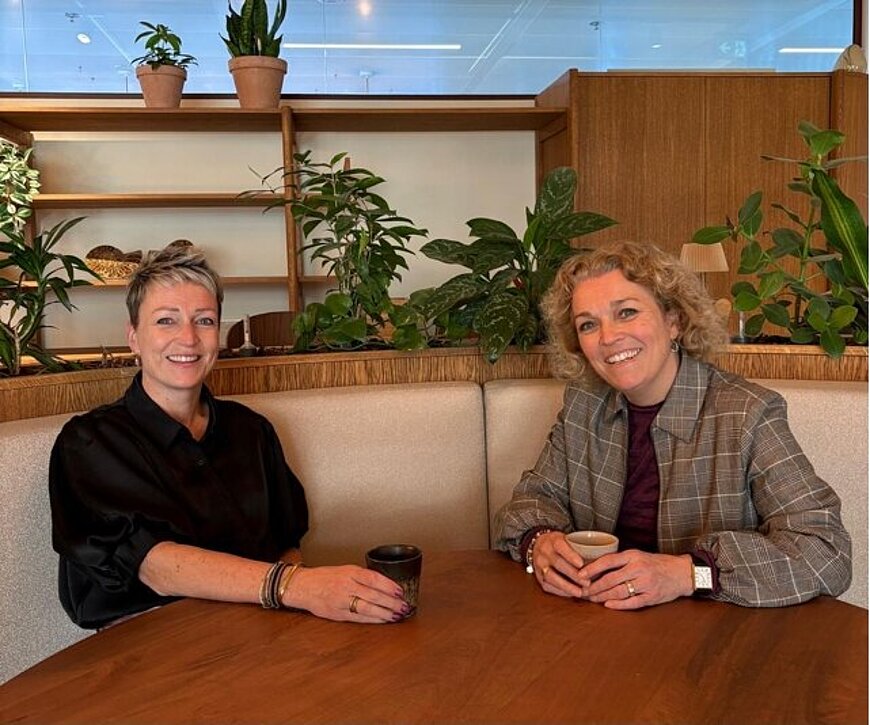
If expectations regarding the demand for technical talent in the semiconductor sector are realised, tens of thousands of additional workers will be needed in the Netherlands in the coming years. A large proportion of that talent will have to come from the lecture halls. Various colleges and universities are therefore joining forces. Together, they are looking at ways to attract more students to choose a technical study programme in the Netherlands. They are also looking abroad. An interview with Antoinette van de Veerdonk and Irene van der Ploeg-Heesbeen about the international recruitment campaigns, which involve active collaboration.
Part of the Beethoven funds is earmarked for the Talent theme. It is expected that 38,000 additional technically trained workers will be needed for the semiconductor sector in the coming years. Current education graduation rates are too low to meet the expected demand. Even if you add retrained workers and lateral entrants to this figure. So active consideration is also being given to recruitment from abroad. Antoinette and Irene are responsible for coordinating the recruitment campaigns. Antoinette on behalf of the universities of applied sciences, Irene on behalf of the universities.
Positive energy
Antoinette explains: ‘We are joining forces because we realise that we cannot recruit the extra people from our own pool alone. We really need international students.’ Irene adds: ‘Together, we are putting the Netherlands on the map. And that generates positive energy.’
To begin with, the universities are focusing on students from Italy, Spain and Indonesia with the joint Next Level concept, while the universities of applied sciences are targeting Italy, Spain, Turkey and Portugal. Irene: ‘We are targeting several countries at the same time, so we can monitor what works and what doesn't.’ Antoinette mentions another advantage. “We know that students from these countries often stay in the Netherlands after their studies, and that's what we want.”
Joining forces
Universities already collaborate frequently in the field of information provision and recruitment of international talent, but this is less common in universities of applied sciences. Antoinette: “This collaboration now also exists between universities of applied sciences. Within the Beethoven project, we look beyond borders, join forces and share our strengths.” Irene also thinks the collaboration is going very well. “We have the same goal and think in terms of the common interest.” The collaboration gives potential students a diverse and complete picture of the possibilities of technical education in the Netherlands.
Marketing experience
Irene and Antoinette both have extensive marketing experience, respectively as head of the marketing department at the University of Twente and as a marketer at Fontys, with a focus on international students. Irene: ‘We are very conscious of the question: what resources do we use when and how? What content suits which target group?’ Antoinette gives an example: ‘HBO universities have a younger target group, who are often unfamiliar with the possibilities of technical, practice-oriented studies. That is why we have developed a quiz, for example, so that they can discover the world of tech in a fun way.’
Link with the business community
The recruitment websites are now complete (www.hightechuniversities.nl and www.studytechinnl.com), but Antoinette, Irene and their colleagues have many more plans. In the coming period, they also want to establish a link with the business community. For example, through a webinar with alumni, so that students can get a good idea of their opportunities in the Netherlands.
First visible results
The first results of both campaigns are now visible. Irene gives an example: “We have organised joint events in the three countries we are focusing on. In Indonesia, we collaborated with the embassy. It's fantastic to be there with our joint story.”
Participating universities of applied sciences and universities
- Fontys University of Applied Sciences
- Hanze
- The Hague University of Applied Sciences
- Saxion
- NHL Stenden
- Inholland University of Applied Sciences
- Zuyd University of Applied Sciences
- Eindhoven University of Technology
- University of Twente
- Radboud University
- Delft University of Technology
- University of Groningen
These activities have been made possible in part by the National Microchip Talent Reinforcement Plan. In the Brainport region, TU/e, Fontys, Summa, Ter AA Brainport Development and the covenant partners are joining forces with the government and the business community under the name Talent for Semicon. Together, we will train thousands of new people for the microchip industry by 2030. In this way, we are strengthening the international competitive position of the Netherlands and the Brainport region as a high-tech region.