Conference Grenzeloos Goed Opgroeien 2026
- Date: 18 Nov
- Time: 12:00 - 17:30 uur
- Location: Hotel Van der Valk Best/Eindhoven
- Entry fee €0
Jump to:
Programme | Inspiration sessions round 1 | Inspiration sessions round 2 | Stands
The Grenzeloos Goed Opgroeien conference brings together professionals from childcare, education, municipalities and organisations working with children and young people. During the conference, you will explore how different languages, cultures and perspectives can support the development of all children and young people in the Brainport region. You will gain fresh insights, discover practical examples and have plenty of opportunities to exchange experiences.
Programme 2026
Time | Programme |
12:00 | Doors open with the opportunity to visit the stands |
13:00 | Start of the plenary programme, moderated by Meike de Jong |
13:10 | "What do children and young people need today to be succesful, resilient and connected in the world of tomorrow?" Discussion led by Meike with:
|
13:55 | Briefing on the afternoon programme |
14:05 | |
14:50 | Short interactive break -> coffee/tea, visiting stands |
15:15 | |
16:00 | Head to the plenary hall |
16:05 | Plenary closing session |
16:45 - 17:30 | Meet your colleagues: a chance to chat over a drink! |
From regional ambition to practice
The Regional Implementation Agenda ‘Samen werken aan Grenzeloos Goed Onderwijs voor alle kinderen’ provides the substantive framework for the conference. Its ambitions are reflected in four programme strands:
Strand 1 – A strong start & entry
A strong start, accessibility, language, multilingualism and finding your place in the region.
Strand 2 – Education & progression
Learning and development, talent development and smooth transitions throughout a child or young person’s learning journey.
Strand 3 – The professional
The knowledge, skills and support professionals need in an increasingly international and diverse region.
Strand 4 – Putting it into practice
Collaboration, inclusion, innovation and solutions that make a difference in everyday practice across the Brainport region.
During the sessions, professionals, researchers and regional partners will share what works, where challenges remain and which next steps are needed. In this way, Grenzeloos Goed Opgroeien turns regional ambitions into knowledge and practical approaches that professionals can use in their work.
Would you like to learn more about the background and ambitions behind the conference? View the Regional Implementation Agenda ‘Samen werken aan Grenzeloos Goed Onderwijs voor alle kinderen’ (in Dutch).
Inspiration sessions, round 1 (14.05 – 14.50)
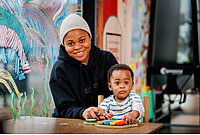
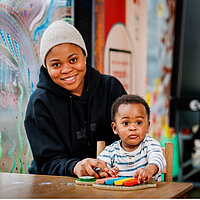
1a A child’s journey does not end at the asylum seekers’ centre
How childcare and education work together to support the development of children from refugee backgrounds. Line 1 – Start and intake | all target groups
1b We hear each other… but do we really understand each other?
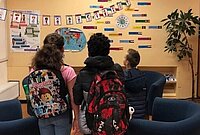
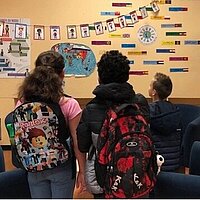
Communication with parents in a highly diverse school context. Line 3 – The professional | primary and secondary education
1c De kinderen zijn er al, wanneer volgt het systeem?
Line 2 – Education and progression | All target groups

1d The support for the child who speaks a different language
The new educational vision Line 1 – Start and intake | all target groups
1e From story to spectrum: multilingual voices coming to life
How to use multilingual stories by young people to promote reading, learning and personal development Line 3 – The professional | all target groups
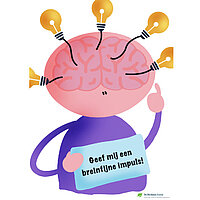
1f Brain-based learning: put neuroscience to work for you
How does the brain actually learn – and what does that mean for your teaching? Line 3 – The Professional | primary, secondary and special education
1g Growing up with boundless potential starts close to home.
Through building, ideas, experiences and beliefs become visible and open to discussion. Line 4 – Working in Practice | all target grou
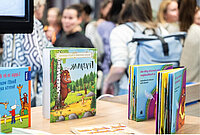
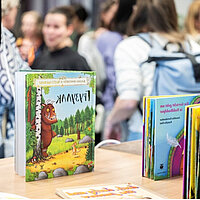
1h Working together to develop culturally sensitive and multilingual education
What have 3 years of work on inclusive and multilingual education brought us, and what still lies ahead? Line 4 – Practical implementation | all target groups
1i 3 mini TED Talks
Inspiration sessions, round 2 (15:15 – 16:00)


2a Who decides what constitutes a good start?
A culturally sensitive perspective on the first 1,000 days Line 1 – Start and intake | all
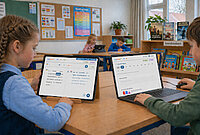
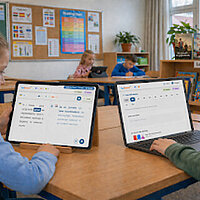
2b From poster to platform: how to create multilingual teaching materials in no time
How can children’s home languages boost learning? Line 2 – Education and progression | primary and secondary education
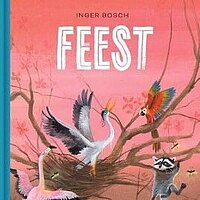
2c From global celebrations to technological adventures!
Discover global citizenship and technology through a picture book Line 2 – Education and progression | pre-school, lower primary
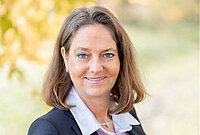
2d Collaborating across cultural differences
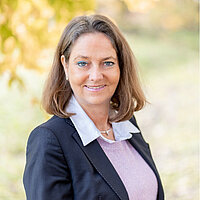
How do you build stronger teams with international colleagues? Line 3 – The professional | all target groups
2e Talent Without Borders: working together to develop the professionals of tomorrow
We explore the challenges and opportunities facing the Brainport region. Line 3 – The professional | further education, primary eduction
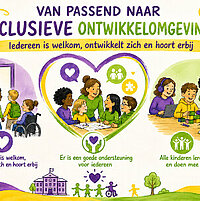
2f From ‘appropriate’ to ‘inclusive’: together we can make a difference!
Together, we explore how to create an inclusive development environment.” Line 4 – Working in practice | all target groups
2g Maths without language barriers: discover the power of Numicon
How can you ensure that a language barrier does not get in the way of learning maths? Line 4 – Practical work | pre-school and primary education
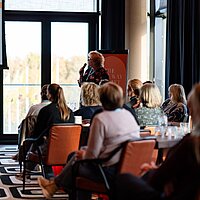
2h From international student to teacher: what does that transition involve in practice?
What is it like to enter the Dutch education system as an international professional? Track 4 – Working in practice | secondary -, vocational education
2i 3 mini TED Talks
Stands
Brainport for Education Curious to find out what Brainport for Education can do for you or your organisation? Do pop by our stand and find out about our projects and initiatives, such as Techkwadraat, Hybrid Tech Teachers, the Brainport for Education Platform and Insidr. You’ll also find plenty of inspiration and practical resources to take away or explore, such as *De Pionier* magazine, religious cards and language fans. Do pop in and have a chat with us!
|
Buddy voor Elkaar: feeling at home together at school and in the region As an international parent, how do you find your way around the Dutch school system and the Brainport region? Buddy voor Elkaar brings local and international parents at school together. Parents help each other with questions about school, parenting and life in the region, practise Dutch together and build new connections. Pop by the stand and discover how a simple meeting can contribute to language skills, engagement, integration and social connection.
|
Brabant East Education Region The education region is concerned with ensuring there are sufficient numbers of well-trained teaching staff, both now and in the future. This involves recruitment, matching candidates with roles, training, mentoring and professional development. In the context of the region, this also relates to the specific dynamics of the Brainport region and diversity.
|
SCALIQ Identifying gifted and talented pupils SCALIQ develops language-independent assessment tools (ZOOV+, VOQS) that objectively identify cognitive talent, regardless of language, culture or socio-economic background — and thus tie in directly with the conference theme ‘the power of diversity’ and the aim of ensuring equal development opportunities for every child.
|
At Home with All Languages Brainport Libraries ‘At Home in All Languages’ is aimed at primary schools and childcare centres in the Brainport region. Together with teachers, childcare staff and reading co-ordinators, we are working to create a reading environment where all languages are welcome and where children aged 0–12 have the opportunity to discover and embrace books in their home languages at school and in childcare centres. Why? Because the power of home languages is the key to language development, strengthens Dutch, fosters cross-cultural understanding and builds a stronger community.
|
International Baccalaureate in mainstream Dutch education (in both Dutch and English) An increasing number of Dutch schools are adopting the International Baccalaureate to enhance their international outlook and professional standards. In doing so, they provide all pupils with a promising start by emphasising basic skills, multilingualism, inclusion, diversity and citizenship. This programme was initially available only to the children of expats. For some years now, it has been implemented in mainstream state schools at no extra cost to parents. This allows pupils, teachers and schools to benefit from the significant advantages of a highly regarded, high-quality educational programme. The IB programmes align seamlessly with the new core objectives. The experience of Dutch schools is that this education is suitable for both newcomers and the children of knowledge workers. |
Inspiration sessions, round 1 (14:05 – 14:50)
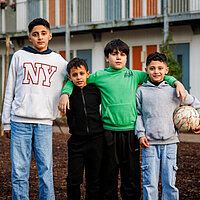
1a De reis van een kind eindigt niet op het AZC 1a A child’s journey does not end at the asylum seekers’ centre
How childcare and education work together to support the development of children with a refugee background
Line 1 – Start and intake | all target groups
What happens to a child who arrives at the asylum seekers’ centre in Budel? Where does the journey towards education, development and participation begin – and who is needed to make this happen?
The COA and Atalenta take you on the journey that children with a refugee background undertake from the moment they arrive in Budel. You’ll gain an insight into the world of reception and education and discover how different professionals work together to support these children’s development.
Through personal stories and real-life examples, the speakers will highlight what is going well, where the challenges lie and what collaboration is required. Because growing up without limits does not stop at the boundaries of an asylum seekers’ centre.
Wieteke den Os, Site Manager, COA Budel
Nicol van Tongeren, Site Director, Opstap
Jasper Beenker, Regional Director, Atalenta
1b We hear each other… but do we really understand each other?
Communication with parents in a super-diverse school context
Track 3 – The professional | primary and secondary education
You speak the same language, and yet your message sometimes seems to come across quite differently. How is that possible? In the super-diverse Brainport region, education professionals meet parents and pupils from a wide range of cultural backgrounds on a daily basis. What you take for granted in communication may be interpreted very differently by someone else.
In this interactive session, you’ll discover how culture influences the way we communicate and what causes misunderstandings. Using relatable real-life examples, an awareness check and insights from the models developed by Richard Lewis and Erin Meyer, you’ll also reflect on your own behaviour. You’ll go home with practical tools to not only understand parents and pupils, but also to understand one another better.
Esmée van der Heiden & Sabine Burrows
SALTO International School I-St@rt
1c The children are already here – when will the system be in place?
Line 2 – Education and Progression | all target groups
The diversity of society has long been evident in our classrooms. But does the way we organise our education and support adequately reflect this?
Drawing on their day-to-day experience at Wereldwijs primary school, Laura and Ruby share how they work towards inclusion, equality of opportunity, multilingualism and global citizenship within a highly diverse school population. Not based on the idea that differences must be eliminated, but on the conviction that they can, in fact, be a source of strength.
Drawing on practical experiences and familiar dilemmas, we take a critical look at the way we view pupils, language and support. What happens if we no longer reason from the system down to the pupil, but from the pupil and their potential up to the learning objective? And what does that require of our education system?
Ruby Maes and Laura van Eijk
Wereldwijs Primary School, KempenKind Education Foundation
1d The support for children who speak a different language
Line 1 – Start and intake | all target groups
The new educational vision
What if, when it comes to internationalisation, we looked not only at what the child who speaks a different language needs, but also at the strength right there beside them? Parents want to guide, support and help their child to grow. This is precisely where a new approach to education lies for schools: not leaving parents on the sidelines, but helping them to participate fully.
In this interactive session, Tosca van Rijswijck draws on her practical experience to show how schools can empower parents. Language is not an end in itself, but a means to foster trust, participation and a sense of agency in the parental role – whilst respecting their own language and identity. Because when a parent grows stronger, this has a positive impact on the child, the family and the school community.
Tosca van Rijswijck, NT-2 teacher, Taalkracht trainer
1e From story to spectrum: multilingual voices coming to life
How to use young people’s multilingual stories to promote reading, learning and development
Line 3 – The professional | all target groups
How do you give young people the space to use their own voice, language and story as a starting point for learning and development?
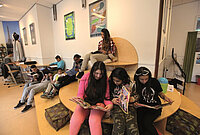
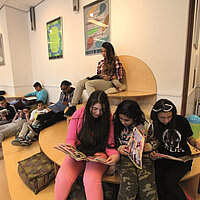
From a multilingual writing competition to a physical fan-shaped display and an interactive reading environment: the Multilingualism and Reading innovation team takes you through this remarkable journey. Young people wrote stories in different languages. Their stories gave rise to an approach that links reading to discovery, reflection and action.
Isabella Gibb and Vera Nieuwkoop will demonstrate what they have developed and share what they have learnt along the way. Afterwards, there will be an opportunity for you to share your perspective: what do you recognise, what possibilities do you see, and how can we take this approach further together?
Isabella Gibb, De Kempen Library
Vera Nieuwkoop, Eckart College
1f Brain-based learning: put neuroscience to work for you
How does the brain actually learn – and what does that mean for your teaching?
Track 3 – The professional | primary, secondary, special education
In this session, you’ll discover how insights from neuroscience and brain-based teaching can be directly applied to your teaching practice. How do attention, memory, emotion, motivation and a growth mindset affect learning? And how can you effectively use feedback, movement, engaging teaching methods and smart brain breaks?
No complicated theory, just practical strategies to help you reduce stress, boost engagement and ensure knowledge sticks better. Discover how you can better align your teaching with the way the brain actually learns – and give your teaching methods a brain-friendly boost.
Daphne van Nunen, Cisca Didden, Felia van Koppenhagen, itinerant educational support workers at De Berkenschutse
1g Growing up with boundless potential starts close to home. Building inclusion in the neighbourhood together
Line 4 – Working in Practice | all target groups
What does inclusion really mean in practice? How do we ensure that children can grow up, play, learn and develop close to home, alongside other children in their own neighbourhood?
In this interactive LEGO® SERIOUS PLAY® session, you will literally build towards inclusion. First, you’ll visualise your own perspective on growing up in an inclusive environment; then, together, we’ll build an inclusive neighbourhood. What does this require of education, childcare, youth support services, parents and local authorities? And what is needed in terms of professionals, collaboration and appropriate provision?
Through building, ideas, experiences and beliefs become visible and open to discussion. In this way, we discover together what is needed to make it possible for children to grow up well, without limits, right on their doorstep.
Claudia Evers, Owner / Consultant / Facilitator, LEGO® SERIOUS PLAY®, Creating Impact
1h Where it shines and where it rubs: working together to build culturally sensitive and multilingual education
Line 4 – Practical Implementation | all target groups
What have three years of working on inclusive, culturally sensitive and multilingual education brought us? And perhaps even more importantly: what still lies ahead?
After three years of the Inclusive Education Programme, we’re taking stock. Through Van Alle Talen Thuis, Samen Leren in Diversiteit and the Inclusive Teaching Academy, we’ll be sharing experiences, outcomes and stories from people who have witnessed these developments first-hand.
But above all, we’re looking ahead. You’ll experience for yourself what a culturally sensitive and multilingual learning environment is – and isn’t – and discover where opportunities and challenges still lie. An interactive session full of inspiring stories, experiences, gems and puzzles. Because sometimes it shines – and sometimes it rubs.
Anne van Buul, Teacher Trainer at De Kempel University of Applied Sciences
Ineke Noordhuizen, Programme Director at Van Alle Talen Thuis
Maudy Keulemans, Programme Lead for Talent and Education at ASML
1i Mini-TED Talks, Round 1
* Live translation
Are you assessing what a pupil knows – or how well they speak Dutch?
How can you fairly assess what a multilingual pupil really knows and is capable of? Language can inadvertently become an obstacle in assessment, meaning that talent and knowledge are not adequately reflected. In this mini-TED Talk, Marina Bouckaert demonstrates the possibilities offered by language-aware assessment. What is permitted and allowed under legislation and regulations? Which multilingual assessment practices are feasible in the classroom? And why is a tailored approach so important? Drawing on research and practical examples, you’ll gain a fresh perspective on fair, inclusive assessment that focuses not on language, but on the pupil’s learning.
Marina Bouckaert, Senior Lecturer at Fontys University of Applied Sciences
Multilingualism as a strength: showcasing what a pupil brings to the table
primary, secondary, special education
How do we ensure that a pupil’s full linguistic background remains visible when they move between classes, schools or educational levels?
During this mini-TED Talk, Mara Rooijmans and Annelies Manders will launch the new website ‘Multilingualism as a Strength’, developed by the Languages Portfolio Innovation Team. Discover how this practical tool supports the smooth transition of multilingual pupils in the Brainport region and helps to highlight their growth and development. You’ll also gain practical guidance and lesson ideas to help you discover and make the most of not only the languages of multilingual pupils, but the linguistic richness of the whole class.
Mara Rooijmans, facilitator of the Language Portfolio Innovation Team, Dutch teacher and multilingualism coordinator at Stedelijk College Eindhoven
Annelies Manders, Language Portfolio Innovation Team, Salto Eindhoven
Just how inclusive and multilingual is your teaching, really?
How inclusive and multilingual is your teaching practice? The Monitor for Inclusive and Multilingual Education (MIMO) helps you gain insight into this. Marina Bouckaert will take you through the story behind this questionnaire and share the initial results and notable trends from the Brainport region. What are we already doing well, and where are there still opportunities? You’ll discover how you can use the MIMO to reflect on your own practice, facilitate discussions within your team and continue to develop professionally together. Be inspired to make even better use of the power of multilingualism in education.
Marina Bouckaert, Senior Lecturer at Fontys University of Applied Sciences
Multilingual programme coverage
A live translation tool in several languages is available in the plenary hall. This allows you to follow both the plenary programme and the mini TED Talks in the language of your choice
Inspiration sessions, round 2 – 15:15 – 16:00
2a Who decides what constitutes a good start?
A culturally sensitive perspective on the first 1,000 days
Line 1 – Start and intake | all
What exactly constitutes a ‘good start’? We often view the first 1,000 days through a Western lens, focusing on early detection, autonomy and risk mitigation. But how do families from different cultural backgrounds view pregnancy, birth and child-rearing?
In this interactive session, you’ll explore how culture, family, faith, language and trust influence our view of a promising start. Using recognisable real-life situations, you’ll look at things through different lenses: your own, the family’s and that of your professional role. Discover how to avoid making assumptions, ask better questions and collaborate with parents and families in a way that is more sensitive to diversity.
Najat Toub-Arssi, Social entrepreneur
2b From poster to platform: how to create multilingual teaching materials in no time at all
Line 2 – Education and progression | primary and secondary education
More and more children speak a different language at home. How can you use that home language to support learning without it taking up too much of the teacher’s time?
Eenbes came up against precisely this challenge. An initial solution using Copilot evolved into an interactive platform that makes life much easier for teachers: simply paste in a text and receive it straight away in the child’s language, at an appropriate reading level and supported by images and speech.
Jens Beimans and Simone van Roosendaal will take you on a journey from the initial idea to the solution we have today. Discover what they learnt along the way, see the platform in action during a live demonstration, and join us in exploring the possibilities for your teaching practice.
Jens Beimans, ICT Coordinator, Eenbes Primary Education
Simone van Roosendaal, Language Coordinator, Eenbes Primary Education
2c From global festivals to technological adventures!
Discover global citizenship and technology through a picture book
Line 2 – Education and progression | pre-school, lower primary
How do you turn a picture book about festivals around the world into a technological adventure? In this inspirational session, you’ll discover how global citizenship, internationalisation and technology come together in surprising ways.
Using the picture book *Feest*, you’ll experience how looking at a story from a different perspective offers plenty of opportunities to let children design, explore and marvel. You’ll gain practical ideas for linking technology to thematic work in early years education and the lower years of primary education. And you can get started straight away: you’ll receive the *Feest* lesson plan with activities for your own class.
Cindy Raaijmakers and Paul Hulshoff, education project manager, Brainport Development
2d Collaborating across cultural differences
How do you build stronger teams with international colleagues?
Line 3 – The Professional | all target groups
Join us on an intercultural and transcultural journey of discovery and find out how to collaborate successfully in a team with diverse cultural backgrounds. What happens when expectations, communication styles and unspoken assumptions differ? And how do you ensure that these differences actually contribute to a stronger team?
In this interactive inspirational session, Manon Rouwette-Janssen will guide you through intercultural and transcultural collaboration. You’ll gain insight into what’s at play when professionals from different cultural backgrounds work together, and receive practical tools to strengthen mutual connection and collaboration.
Manon Rouwette-Janssen, Transcultural systemic coach and trainer, Master in Coaching
2e Talent Without Borders: working together to develop the professionals of tomorrow
Line 3 – The professional | vocational education, primary education
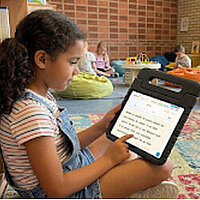
It is 2035. Children are growing up in a Brainport region that is more international, more technologically advanced and more diverse than ever before. What kind of professionals do they need to enable them to develop to their full potential? And how can we, as a region, work together to ensure that these professionals can continue to learn and grow?
In this interactive future exploration, we look at the challenges and opportunities facing the Brainport region. Together with other participants, you will help shape the profile of tomorrow’s professional and explore what this requires in terms of professional development, knowledge-sharing and regional cooperation. What knowledge, skills and attitudes are needed? And above all: what can we do together today to be ready for tomorrow?
Brabant East Primary Education Region
2f From ‘appropriate’ to ‘inclusive’: together we can make a difference!
Line 4 – Working in practice | all target groups
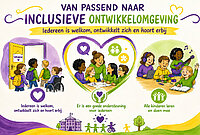
How do we ensure that every child and young person feels welcome, can develop and can participate? The shift from ‘appropriate’ to ‘inclusive’ requires collaboration across organisational and professional boundaries.
In this interactive session, we will explore how we can work together to build an inclusive environment for development. What does this require of childcare, education, local authorities, youth care and other partners? Where are the opportunities, what challenges do we face, and what concrete next steps can we take? Share your experiences, contribute your ideas and discover what we can do together to further shape inclusion.
Maaike Nieuwenhuis and Caroline van der Hulst, Regional Directors at Atalenta
2g Maths without language barriers: discover the power of Numicon
Line 4 – Practical Applications | Early Years, Primary
How can you ensure that a language barrier does not hinder the learning of maths? For multilingual children, the Dutch language used in maths can present an additional challenge. Numicon makes maths visual and tangible and helps children to understand mathematical concepts, even when their command of Dutch is still developing.
In this interactive session, you’ll be introduced to the Numicon learning module and the context of multilingual children, and you’ll discover how language support and concrete materials can contribute to inclusive maths education for children aged 3 and above. You’ll see Numicon in action, try it out for yourself and gain ideas that you can apply to your own teaching or childcare practice.
Karen Marseille, Inge de Rooij, Fieke van Groningen, External educational advisers at SSOE
2h From international student to teacher: what does this transition involve in practice? International students in the classroom
Line 4 – Working in practice | secondary education, vocational education
What is it like for an international professional to make the move into the Dutch education system? And what does this require of the professional, the training programme and the school?
You come to the Netherlands as a STEM professional and hope to build your future here. With sound professional knowledge and a drive to make a difference in your new environment, a career in education is an attractive option.
But what challenges do you face when you want to use your maths skills to help tackle the teacher shortage? And what are the benefits for a school?
Together, we’ll explore this from various perspectives: research, experience and practice (trainers, international professionals, mentors and schools). An open and practical session on opportunities, challenges and lessons learnt, for schools curious to find out what it means to give international talent a chance in the classroom.
ESoE – Annemieke Vennix and Ruurd Taconis, ESoE
Wouter Verhaak
And an international professional
Session 2i Mini-TED Talks, Round 2
* Live translation
The power of multilingualism in inclusive education: what role can social robots play?
How can pupils’ home languages be harnessed as an asset in inclusive education? Research shows that home languages can help not only with learning Dutch, but also with learning English – particularly for vulnerable pupils with language disorders.
But how do you make room for different home languages in day-to-day teaching practice? Prof. Dr Elena Tribushinina takes you through research into multilingualism and shows the surprising role that technology could play in this. Social robots may offer new opportunities to support pupils and truly harness their multilingualism as a strength.
An inspiring glimpse into the future of multilingual, inclusive and technology-supported education.
Elena Tribushinina, Professor at Utrecht University
Buddy voor Elkaar: feeling at home together at school and in the region
Integration starts in the school playground
How local and international parents help each other find their way around school and the Brainport region
As an international parent, how do you find your way around the Dutch school system? And should a school actually answer all those questions itself? Buddy voor Elkaar opts for a simple approach: bring local and international parents into contact with one another, right there at school.
Parents help each other with questions about school, parenting and life in the Brainport region. Meanwhile, they practise Dutch together and forge new contacts and connections. And it works: dozens of groups have already been set up in a short space of time.
Fleur Besters from Brainport voor Elkaar demonstrates how a relatively simple get-together can contribute to language skills, engagement, integration and social cohesion – and how teachers and secondary school pupils can also become part of this movement.
Fleur Besters, Programme Manager at Brainport voor Elkaar
Breaking down barriers in the classroom
Global citizenship begins where differences meet
What do pupils need to find their way in an international, diverse and constantly changing world?
Using the updated Nuffic Model of International Competences, Erick Davelaar guides you through the knowledge, skills and attitudes that are essential for this. But global citizenship doesn’t start with the pupil alone. You, too, as an education professional, play a vital role. How do you deal with differences? How do you connect different perspectives? And how do you become an intercultural bridge-builder in your own classroom? An inspiring mini-TED Talk that invites you to break down barriers, both literally and figuratively.
Erick Davelaar, Programme Manager, Erasmus+/Nuffic
* Following the programme in multiple languages
A live translation tool in several languages is available in the plenary hall. This allows you to follow both the plenary programme and the mini TED Talks in a language of your choice
This year, the ‘Grenzeloos Goed Opgroeien’ conference has undergone a name change. With ‘Grenzeloos Goed Opgroeien’, we emphasise the importance of a strong, continuous developmental pathway, in which childcare and education work closely together to ensure equal opportunities, development and well-being for every child. Because growing up well requires connection: between professionals, organisations and the worlds of children and families.