Team Aster
At student team Aster (TU/e), our mission goes beyond technology alone. We aim to bring space exploration closer to students, even at a university that does not yet offer a dedicated aerospace program. From Eindhoven, we are building the very first satellite from North Brabant.
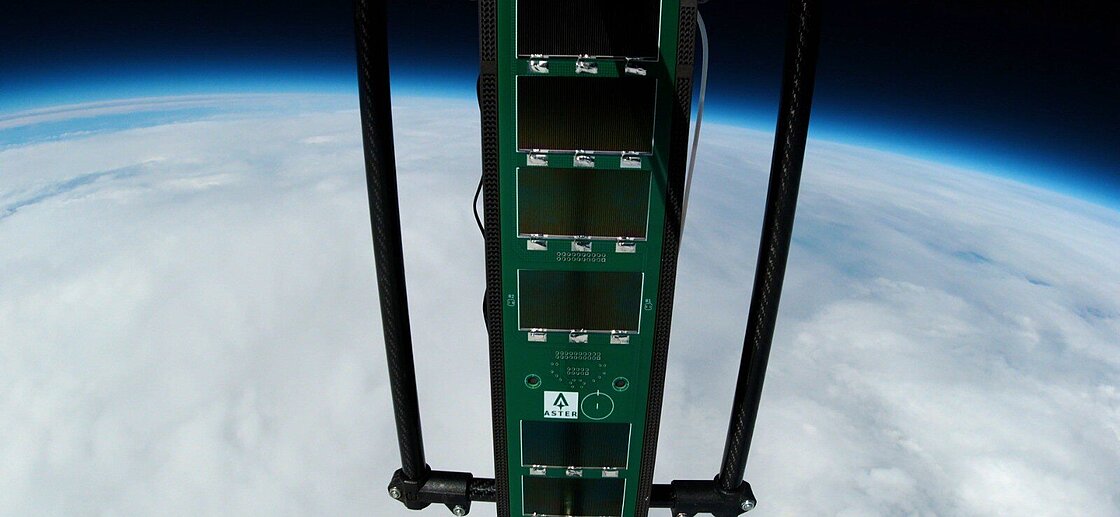
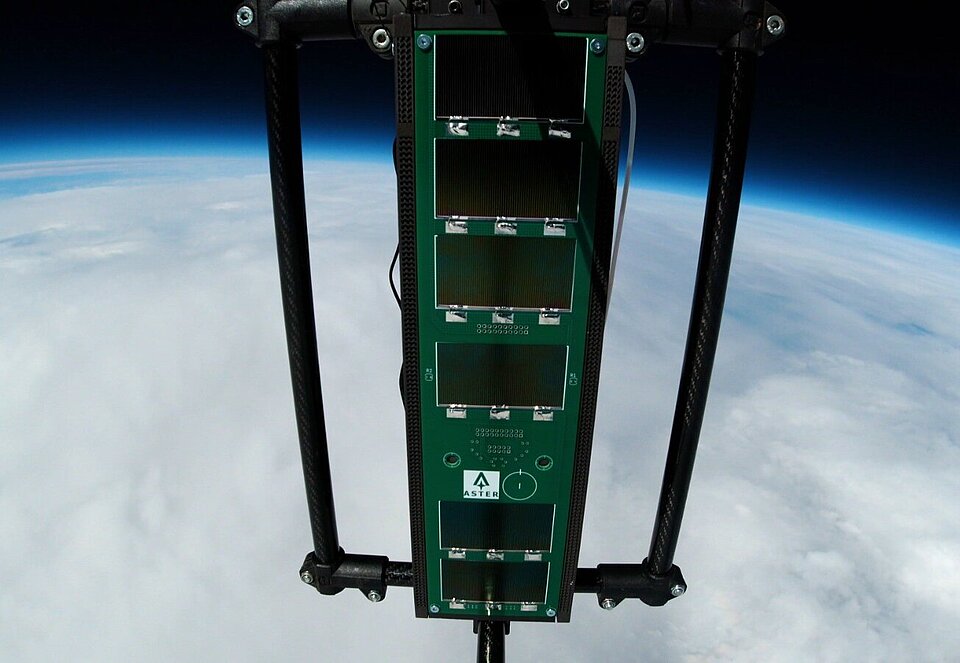
In 2024, we carried out our first CupeSat prototype named Icarus I in our mission called Hydrogen. This so-called CubeSat, a small satellite measuring 30 by 10 by 10 centimeters, is a compact platform that allows space technology to be tested in an accessible and cost-effective way. Its primary function is to carry a payload, the component that performs the mission, such as scientific instruments or communication systems.
During the test flight, the payload consisted of a photonic sensor from PhotonFirst, a leading Dutch company in the field of integrated photonics. This sensor is built using optical fibers and collected strain data, which refers to measurements of how materials stretch or compress under conditions such as temperature differences or mechanical vibrations during flight. The sensor registered minuscule deformations, which is critical when testing CubeSat structures in space-like environments.
The satellite reached an altitude of 34 kilometers via a weather balloon and withstood temperatures as low as minus 40 degrees Celsius. The mission demonstrated that our technology can survive the harsh conditions of near space.
Following this flight, Aster grew from 15 to over 30 members. We collaborated with Team VOID, the TU/e rocket team, on a new payload capable of measuring magnetic fields and structural deformation during a rocket launch. This launch is scheduled for March 2026.
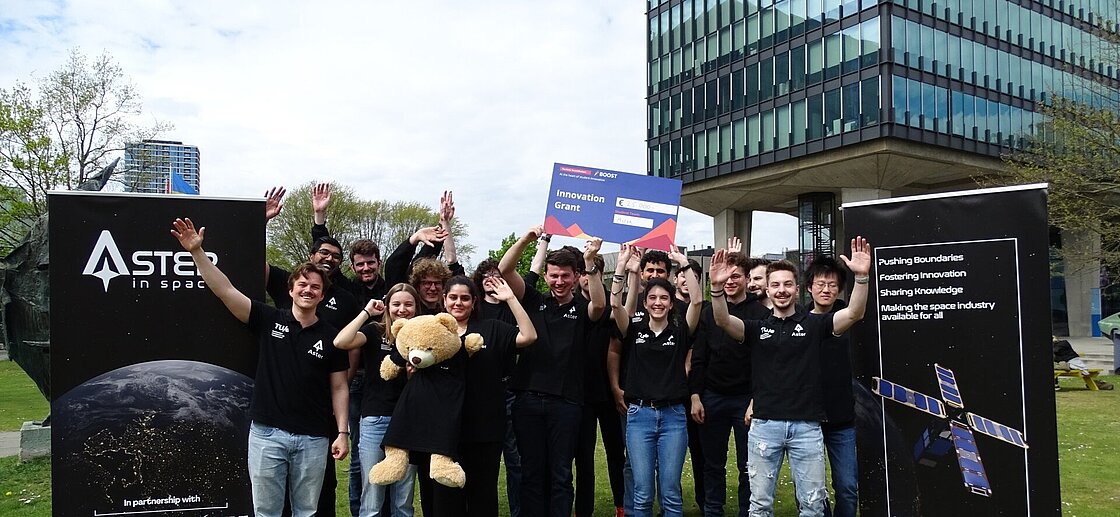
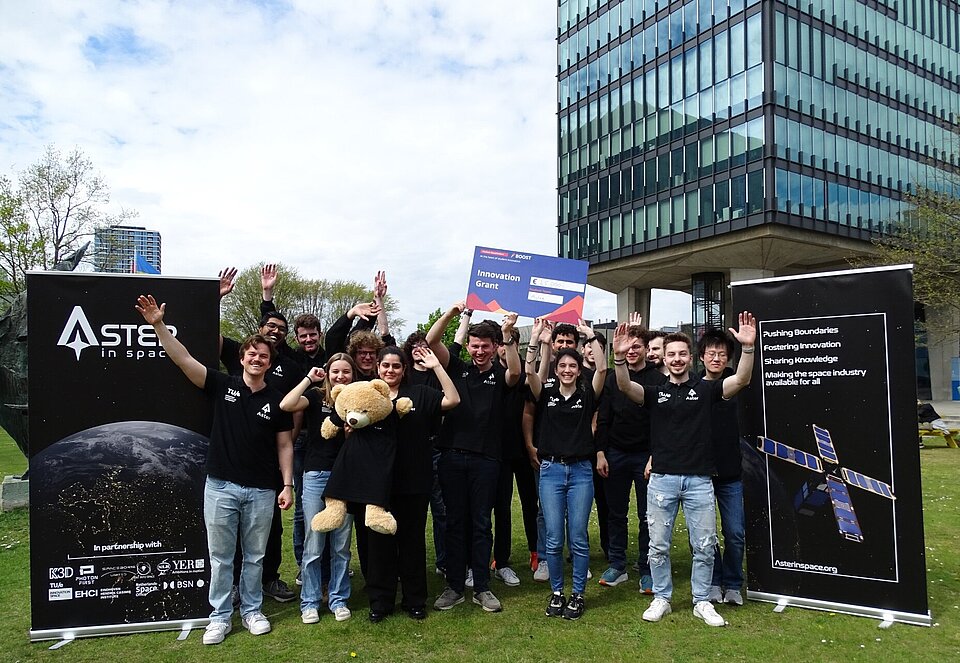

Last month, we completed our own ground station, a system with antennas, tracking motors, and radio equipment that enables communication with satellites. This summer, it will be installed on the rooftop of the Vertigo building, the tallest tower on the TU/e campus. It will allow students to track signals from open-source satellites and receive real-time data.
In addition, we began a collaboration with the Department of Electrical Engineering to develop an innovative antenna for radio astronomy. This antenna will serve as the scientific payload for research purposes of the Electrical Engineering faculty and will be integrated into our first satellite, which we aim to place in a stable orbit around Earth.
Our mission does not end with developing technology. We also want to strengthen the ecosystem in Brainport. Together with companies like PhotonFirst, we co-create the space technologies of tomorrow. We are open to partnerships with companies that can contribute expertise or technology, for example in the areas of ADCS systems, star trackers, or space-grade microcontrollers. Other forms of support, such as access to test facilities or knowledge sharing, are equally welcome.