The workplace adds an element of authentic learning
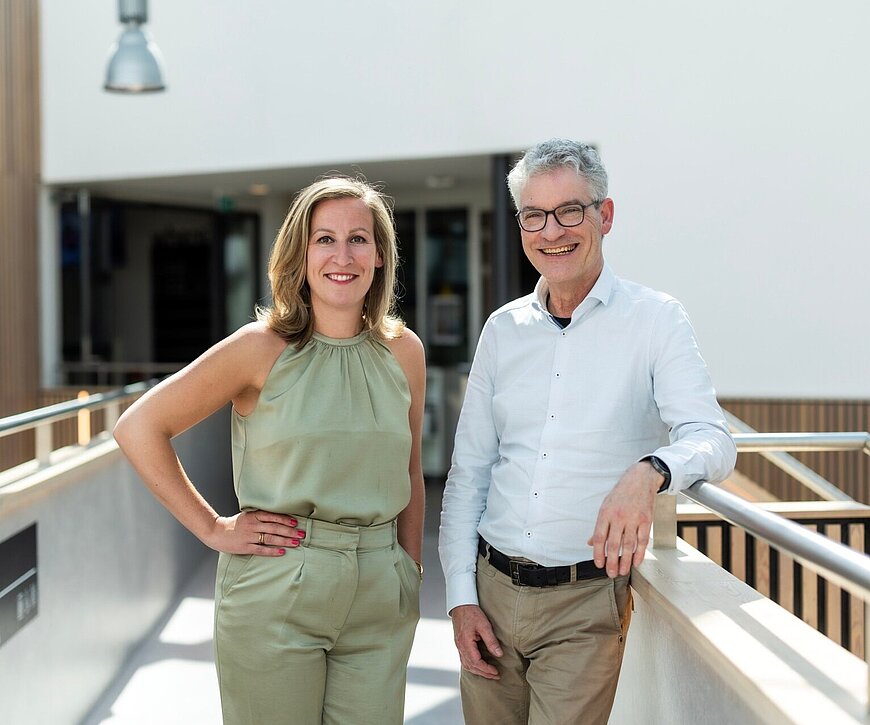
One morning at Fontys Technology, a young engineer from ASML speaks enthusiastically about her profession and the technology she works with every day. That same afternoon, she supervises a group of students there as a hybrid lecturer. ‘That sort of thing can really just happen here,’ says Maartje Damoiseaux, director of Fontys Technology. Since the merger of several technical institutes in early 2026, Fontys Technology has grown into one of the largest technical higher professional education institutions in the Netherlands, and that scale makes it easier to bring in professionals from the business world to teach.
Whereas hybrid lecturers previously had to be placed through various channels, the higher education institution now operates a single, centralised approach. ‘If someone from the professional field wants to teach with us, we can act much more quickly. This also makes it easier for people to take up positions at other higher education institutions,’ says Maartje.
With your feet in the mud
For students, this brings immediate benefits. ‘It’s great fun to be taught by lecturers who have their “feet in the mud”. Not that regular lecturers lack practical experience, but it’s inspiring when someone can tell you what happened to them in the workplace that very week.’ Fontys calls this authentic learning, says Paul Janssen, a member of the management team. In other words: letting students learn as close as possible to the real working environment. ‘Ideally, education would take place within the business world, but that’s very difficult to organise. By bringing professionals into the education system, you come quite close to that ideal.’
To ensure the link between education and the business world works effectively, the institution deploys so-called ‘matchers’: Fontys staff who actively seek out professionals keen to make a difference in education. They then assess where someone would be best suited. ‘We have individual discussions with everyone,’ says Maartje. ‘What knowledge do they bring to the table? What do they enjoy? And what would they like to discover or develop here?’ Once matched, hybrid lecturers are assigned a mentor within Fontys and can take tailored courses to prepare for teaching.

Experiencing the journey
According to Fontys, this cross-fertilisation works both ways. Students benefit from up-to-date practical knowledge, whilst full-time lecturers learn from people in the business world. Paul cites the example of a hybrid lecturer from the automotive sector who moved to an organisation where protocols and certifications are key. ‘As a result, that new knowledge automatically found its way into our institute too. You also get to experience part of that employee’s journey, which is incredibly valuable.’ Conversely, Maartje observes that some permanent lecturers actually become curious about taking a detour into the business world. ‘We had a colleague who thought: why shouldn’t I work outside Fontys one day a week? In the end, that’s exactly what he did. That sort of cultural exchange is incredibly valuable.’
Two worlds, two agendas
There are also stumbling blocks. After all, hybrid lecturers have two employers with two agendas that do not always align. Maartje: ‘You’re constantly navigating the demands placed on you by both work environments. Teaching is something you do with your heart. That can sometimes take a greater mental toll than the time you have available.’ Expectations also differ at times. International professionals, in particular, sometimes view education differently from what Fontys is used to. ‘Education has long since ceased to be solely about imparting knowledge. Students expect guidance, interaction and coaching. That’s why those initial discussions are so important, so that we know whether we can meet each other’s expectations,’ says Paul.
‘An explosion of well-trained professionals’
The pair are optimistic about the future of hybrid teaching. This is certainly true in the Brainport region, where the education sector and the business community are collaborating ever more closely. Paul points to the future BIC 2 campus in Eindhoven, where businesses and educational institutions will soon be situated literally side by side. ‘Then hybrid lecturers and hybrid learning environments will become more commonplace than ever.’ According to Maartje, this is also sorely needed: ‘Ultimately, this will lead to better education and an explosion of well-trained technical professionals.’