Letter of intent for improved Brainport–Brussels train connection
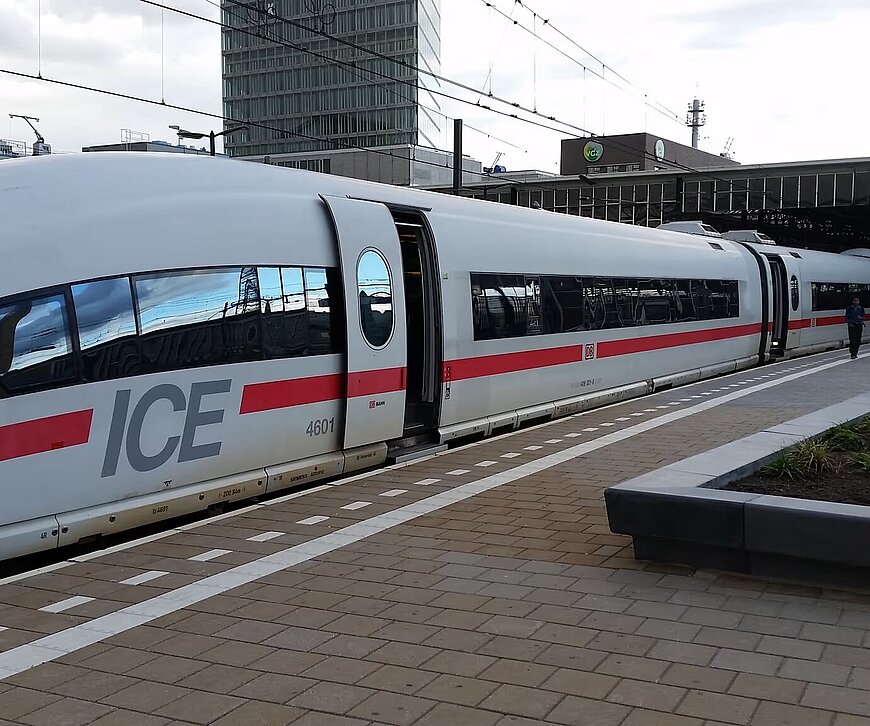

Belgium and the Netherlands have signed a letter of intent to improve the train connection between Brussels and Eindhoven. The focus is on improving access to the tech region, with the aim of reaching concrete agreements in the summer of 2026.
It sounds like a breakthrough for international travellers. Outgoing State Secretary Thierry Aartsen and his Belgian counterpart Jean-Luc Crucke signed a new cooperation agreement in Antwerp on Wednesday evening. The goal is clear: a better rail connection between the tech hub Brainport Eindhoven and the political heart of Europe, Brussels. The ministers describe the current situation as untenable. Yet the announcement immediately raises questions. Is it about new railways, or just a modified timetable? And are the ministers even familiar with the current situation?
A signature without a concrete timetable
The essence of the news is a declaration of intent. The Netherlands and Belgium have expressed their desire to improve access to the Brainport region from the south. Both countries recognise the economic importance of a smooth connection between the high-tech campus around ASML and the European institutions in Brussels. The signing in Antwerp is presented as a “fantastic first step”. This diplomatic starting shot should lead to concrete agreements in the summer of 2026. However, it is crucial to understand exactly what has been agreed. There is no construction plan on the table. No ground has been broken. It is purely a matter of research.
This study focuses on two scenarios. The first option is to build completely new infrastructure. This is costly and time-consuming. The second option is to optimise the existing rail network. In the latter case, this would involve a new intercity service that uses the current rail network, but with fewer stops and smarter route planning. For passengers, the method makes little difference, as long as travel time is reduced. For taxpayers, however, the difference amounts to billions of pounds.
The myth of four transfers
To emphasise the urgency of the plans, State Secretary Aartsen uses striking rhetoric. He states that the current journey requires “about four transfers” and takes three and a half hours. Anyone who opens the journey planner today will see a completely different picture. The journey from Eindhoven Central to Brussels-South is currently perfectly feasible with only one change in Breda. The total journey time via that route is approximately two and a half hours. Anyone willing to change twice, in Breda and Antwerp, can even get there in two hours and 23 minutes.
By car, without traffic jams, it takes an hour and a half to drive from Eindhoven to Brussels. But that can take much longer with the frequent traffic jams around Antwerp and Brussels. So the train loses out in terms of pure speed, but the situation is not nearly as dramatic as the State Secretary makes it out to be. The real problem is not the possibility of getting there, but the frequency, reliability and necessary changes.
The economic necessity of the Brainport line
The Brainport region is no longer a local success story, but an indispensable link in European strategic autonomy. With the chip industry as its driving force, the importance of this region has become supranational. A direct and reliable connection to Brussels, the political heart of Europe, is therefore not a luxury but a necessity.
Only in this way can knowledge workers and policymakers efficiently switch between the place where technology is created and the place where policy is determined. Ambitions are free, but railway lines are not. A painful detail in the reporting is the total lack of financial coverage.
No money has been made available for the realisation of the plans at this stage. The provinces and railway operators (ProRail and Infrabel) are allowed to contribute ideas, but without a bag of money, it will remain nothing more than nice plans. The signing in Antwerp is an important signal, but no guarantee of success. The coming months will be crucial. By the summer of 2026, vague intentions must be converted into firm agreements. It will then become clear whether politicians are prepared to open their wallets or whether it will remain a matter of shifting train times on paper.