Europe’s main challenge: turning innovation into scale
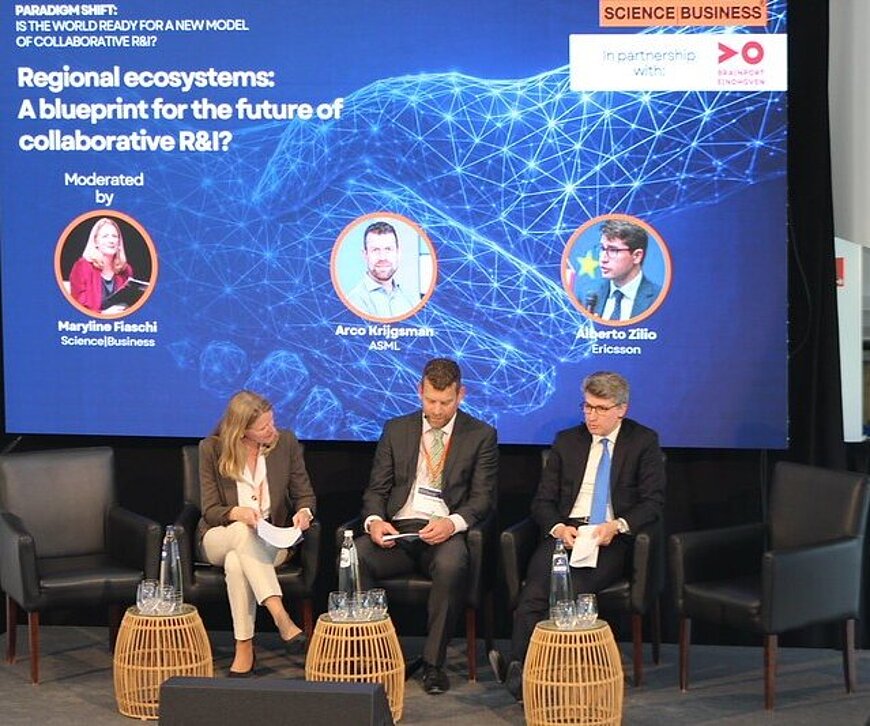
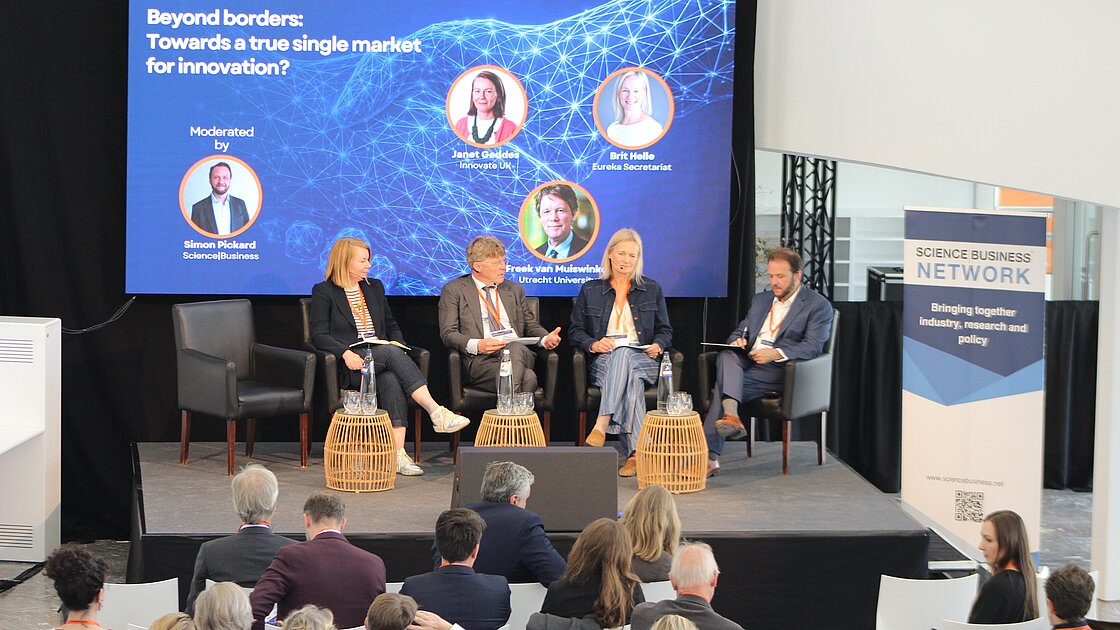
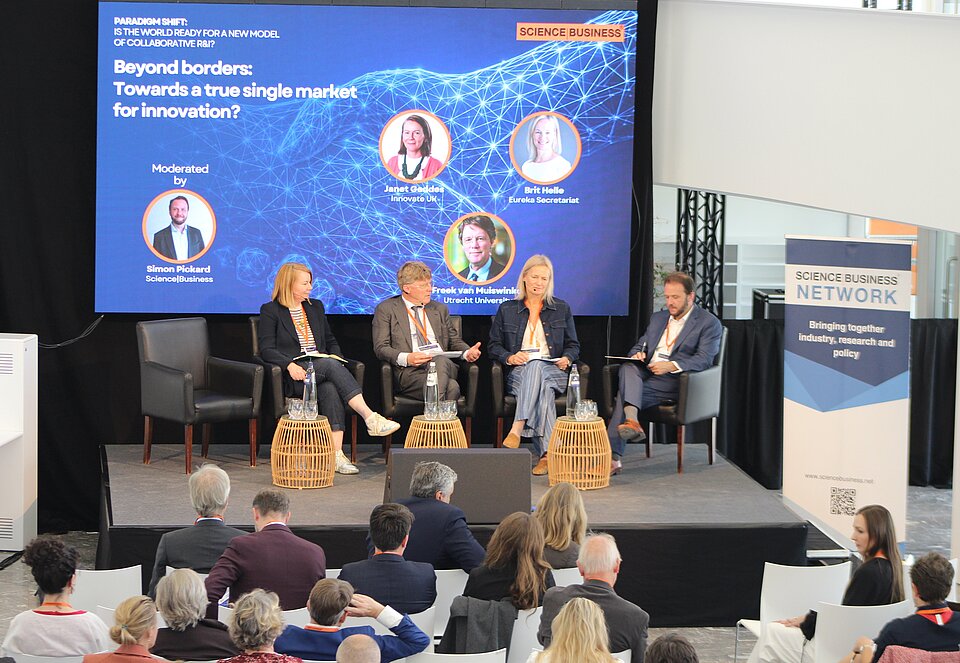
At the Science|Business conference “Paradigm Shift: Is the World Ready for a New Model of Collaborative R&I?”, organised with Brainport Eindhoven in Brussels on 16 June, representatives from industry, academia and innovation organisations delivered a clear message: Europe does not need better research, but a stronger ability to turn knowledge into economic and strategic impact. The real challenge is not research, but scaling up. The discussion comes at a crucial moment, as policymakers shape the next EU budget, FP10 and the proposed European Competitiveness Fund.
Industry leaders from ASML and Ericsson painted a pragmatic picture of Europe’s position in the global innovation landscape. According to Arco Krijgsman, Head of Public Private Partnerships at ASML and Alberto Zilio, Head of European Governement Affairs at Ericsson, Europe remains a global leader in critical technologies such as semiconductors, connectivity and biotechnology. The European debate should not solely be about “catching up” with other continents. The leadership is there, but, admittedly and without fundamental changes, under increasing pressure. The reason is not a lack of innovation, but a lack of scale.
While American companies can grow within a large domestic market and Chinese companies benefit from a highly integrated home market, ambitious European companies have to internationalise from day one. In doing so, they face a fragmented internal market, differing national regulations and lengthy administrative procedures.
For industry, this is the central challenge for Europe’s future innovation policy. New research programmes remain important, but without an attractive business environment, access to growth capital, domestic demand and a truly functioning Single Market, too many European innovations will continue to scale elsewhere.
Collaboration remains a European strength
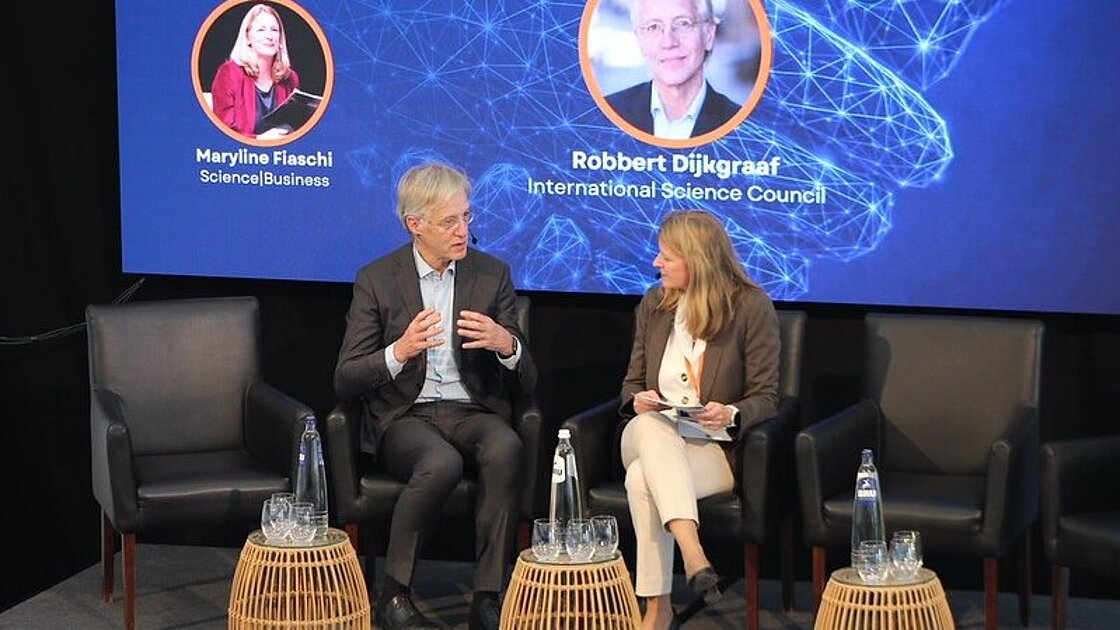
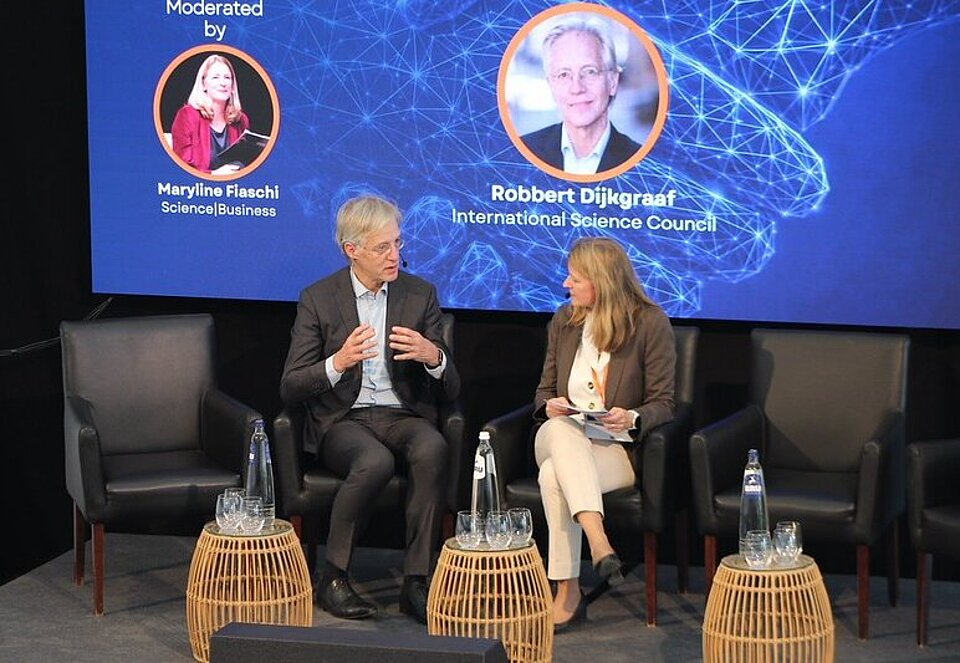
Representatives from academia and innovation organisations offered a complementary perspective. Robbert Dijkgraaf, President-elect, International Science Council and former Minister of Education, Culture and Science of the Netherlands, Janet Geddes (Innovate UK), Brit Helle (Eureka Secretariat) and Freek van Muiswinkel (Utrecht University) highlighted that international collaboration has long been one of Europe’s greatest strengths.
European research programmes are among the most successful in the world, and cross-border innovation projects consistently deliver strong results. Companies engaged in international collaboration tend to grow faster, increase productivity and gain easier access to new markets.
According to the representatives from academia and innovation agencies, Europe should preserve and strengthen this advantage. The key challenge is to better connect regional, national and European initiatives; and make surethat companies receive support throughout their entire investment journey.
From collaboration to competitiveness
Although representatives from business and representatives from academia and innovation agencies approached the topic from different angles in the various panels, they ultimately arrived at the same conclusion: collaboration remains essential but with a clear goal.For businesses, the debate on collaborative R&I is fundamentally about competitiveness. Collaboration should lead to new products, new companies and new markets. Achieving this requires connected ecosystems in which research, entrepreneurship, investment and industry reinforce one another. "Not just as local success stories but as part of Europe's wider industrial and technological capacity and not as a background context but as a core part of how companies operate."
Regional innovation ecosystems such as Brainport Eindhoven were highlighted as examples of how this can and does work in practice. In these environments, large companies, startups, knowledge institutions and investors interact closely, accelerating both innovation and commercialisation.
A new mission for Europe
The debate around FP10 and Europe’s future innovation policy is therefore about much more than budgets or funding instruments. The fundamental question is how Europe can connect its world-class research base with a stronger industrial and economic agenda; and how the innovation ecosystems holding that research strength and industial strength can be better connected, for the benefit of the EU and its citizens
Industry representatives delivered the most urgent message: Europe already possesses many of the technologies the world needs. The challenge now is to ensure that European companies can develop, manufacture and scale those technologies in Europe.
The future of collaborative R&I therefore lies not only in more collaboration, but in collaboration that delivers impact, investment, scale and strategic autonomy. Only then can Europe maintain its position in a world where technological competition is increasingly shaping economic prosperity and geopolitical influence.