A future where data shows the way
How the RAI Association, TNO and partners are building the digital infrastructure for smart mobility
The future of mobility no longer takes place solely on the road; it is emerging from the data flows between vehicles, sensors and traffic systems. Within the DITM (Digital Infrastructure for Future-Proof Mobility) programme, RAI Association, TNO and their partners are laying the foundations for a smart and connected mobility system, in which collaboration is paramount.
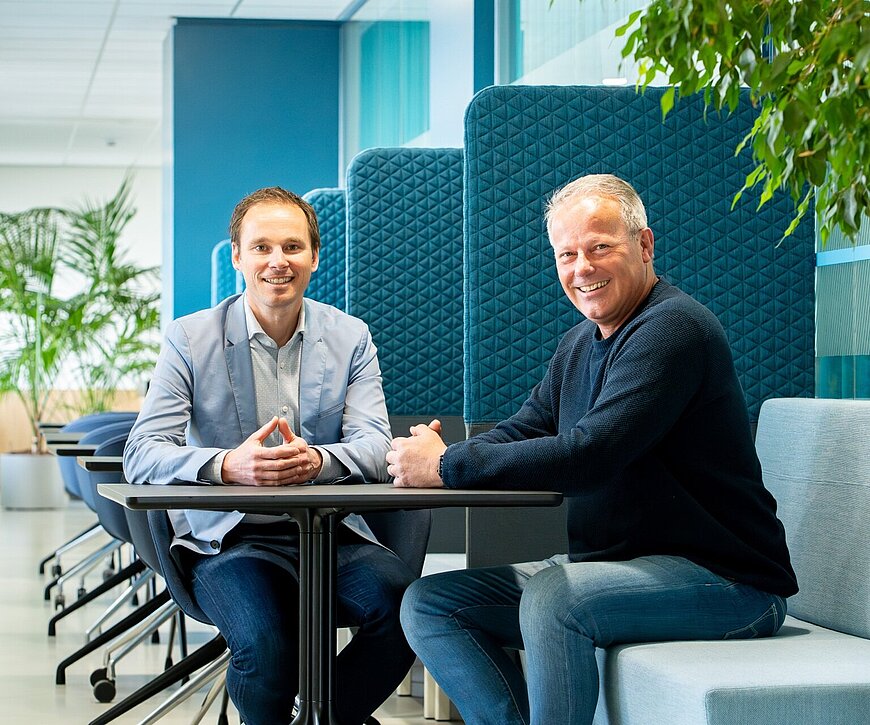
Two people driving this process from the front line are Bram Hendrix of RAI Vereniging and Wiljan Willems of TNO. Hendrix is responsible for the Smart Mobility, digitalisation and internationalisation programmes within the automotive sector. Willems works at TNO on the transition pathways that translate technology into societal impact. Together, they ensure that the Netherlands remains at the forefront of smart, safe and sustainable mobility.
From vision to roadmap
“Within the automotive industry, we set out on a clear roadmap years ago,” Bram Hendrix begins. “That plan is based on key societal goals: zero emissions, zero road casualties and zero traffic jams. Ambitious goals, but they give direction to what we do.” From that vision emerged the DITM programme, in which public and private parties collaborate on the digital infrastructure for mobility. Within this programme, the transition pathways – coordinated by the RAI Association and TNO – form the backbone of the collaboration.
Hendrix explains: “Our role is twofold. On the one hand, we support Brainport with the overarching project management. On the other hand, we look at the coherence within the transition pathways: where did we start, what have we achieved and what is still missing? If we’re missing something, we ensure that follow-up projects are set up.” According to him, digitalisation is a complex playing field with many interests at stake. “Some parties are involved in the project, others are not. That is why it is crucial to maintain contact with the outside world. We do not want to lose touch with what is happening there, because digitalisation never stands still.”

The bridge between data and decisive action
Whilst Hendrix primarily sets the direction and maintains links with industry, Willems focuses on building bridges between technology, policy and practice. “We constantly try to understand: where were we, where are we now, and where do we want to go? And above all: what is needed to get there?” he explains. “Our role is to bring parties together and connect them; not just technically, but also in terms of content and strategy.”
A concrete example is the practical use of data. “Autonomous vehicles can contribute to solutions for structural bottlenecks in the mobility system,” says Willems. “But this must be done safely, with reliable data, technology and partners willing to apply it. Our task is to build that ecosystem and demonstrate: this is how it can be done, and this is the added value.”
According to Hendrix, collaboration with companies such as TomTom and Monotch is also essential. “TomTom, for example, works with industrial data from vehicles,” he explains. “Monotch helps us link this data to public sources such as the NDW (National Road Traffic Data Bank) or the Ministry. This creates a more complete picture of what is happening on the roads and enhances the social value of technology.”
Technological building blocks
Collaboration within DITM centres on the development of Key Enabling Technologies: the building blocks of smart mobility. These include sensors, communication standards, artificial intelligence and data-sharing platforms.
“We want to demonstrate that combining public and industrial data offers enormous added value,” emphasises Willems. “If one car detects something different from another, and you combine that with government map data, you learn from each other and improve the system. With a single vehicle, you’re limited; with many vehicles and public data combined, you enhance safety, sustainability and traffic flow.”
According to Hendrix, this marks the shift from isolated innovations to a coherent ecosystem. “It’s wonderful if a bus can drive partly autonomously, but it really needs to get out on the road. For that, you need transport operators and public authorities who believe in it. Otherwise, you’ll end up with a high-tech bus that nobody uses.”
From trial to practice
The results of this approach are now becoming apparent. Several pilot projects involving automated vehicles are currently underway at DITM, ranging from logistics applications to public transport. “VDL is developing technology for buses that can drive semi-autonomously,” explains Willems. “We’re looking at how we can apply that technology more widely. Could lorries use it too, for example? Is the technology suitable for use in the Port of Rotterdam or on logistics corridors across Europe? We’re constantly asking questions like that.”
That quest consistently leads to new collaborations. “Sometimes you need different partners for the next step,” he continues. “From researchers and software developers to policymakers and transport operators. Within the transition pathways, we bring those worlds together.” Hendrix adds: “Technology is one thing, but without policy, regulation and public support, you won’t get anywhere. The strength of this project lies precisely in the fact that we take the whole ecosystem into account: from the technician to the driver.”

Technology with purpose
This collaboration offers significant social value. “Automation can help address the driver shortage,” explains Willems. “But if we’re going to automate anyway, let’s make sure it also improves safety and traffic flow. We’re moving from individual vehicle automation to collaboration between vehicles and infrastructure. That delivers far greater benefits.”
Hendrix adds: “Digitalisation not only helps solve societal challenges, but also strengthens our economic position. We want the Netherlands to retain and create jobs in this field. Technologies such as AI play a key role in this – not as an end in itself, but as a means to make better use of data.”
That combination of social value and economic growth is precisely what sets Brainport apart. Smart mobility here is not just a technological transition, but also a strategic one: a way to keep the Netherlands future-proof.
Innovation with a dual impact
Within DITM, there is a strong focus on dual-use technologies: those that deliver both social and economic value. “What we learn from autonomous buses can also be applied to logistics vehicles or industrial applications,” explains Willems. “In this way, we accelerate innovation and make the most of our investments.”
The approach is also distinctive at European level, emphasises Hendrix. “The Netherlands is demonstrating that we are not only good at developing technology, but also at collaborating. That is our strength: we bring together industry, knowledge institutions and government bodies around shared goals.”
The knowledge and systems developed within DITM can also serve as an export product. “Secure data sharing, interoperable systems and AI-driven traffic information – these are themes that the whole of Europe is working on,” says Willems. “We are demonstrating how it works in practice.”

Learning together, accelerating together
A key pillar of the programme is knowledge sharing. That is why there is close contact between the consortium members, and they also meet at special events such as DITM Day, or the DITM Final Event Day, which takes place on 18 June. “Parties must be able to learn from one another,” says Hendrix. “What works, what doesn’t, and what can we take from that into future projects? That cross-pollination is perhaps our greatest strength.”
Willems nods: “We look not only at technology, but also at behaviour, regulations and acceptance. A system may be technically perfect, but if users don’t trust it, it won’t work. By bringing all these perspectives together, we accelerate innovation.”
Knowledge sharing is not a side issue here, but one of DITM’s design principles. Participating parties share data, insights and methodologies, enabling knowledge to spread faster than in traditional projects.
Milestones with an impact
The collaboration is now beginning to yield clear results. The first data links between public and private sources have been established, cooperation between partners has been structurally strengthened, and reference architectures have been developed to serve as a blueprint for new initiatives.
“The biggest milestone is the connection we have established,” says Hendrix. “Between vehicle data and public data, between technology and policy, between knowledge and application. That is the infrastructure on which we can build further.”
Willems adds: “We have demonstrated that data sharing is possible – securely, reliably and with respect for privacy and ownership. In doing so, we have laid the foundations for the next wave of innovation.”
Heading towards the next wave of innovation
The coming years will be all about further development and scaling up. “We want to make the transition from pilot projects to structural applications,” says Willems. “That means: establishing standards, organising governance and ensuring the technology works in practice.”
Hendrix emphasises that collaboration remains key. “We’re doing this together with our partners in Brainport, but also beyond. Digitalisation doesn’t stop at regional borders. We need Europe to really scale up these innovations.” The next waves of innovation are already on the horizon: vehicle-to-infrastructure communication, AI-driven traffic management systems and autonomous logistics. Within DITM, the foundations are now being laid to make this possible.
Towards a smarter, safer and more sustainable mobility system
As far as Hendrix and Willems are concerned, the direction is clear: technology must contribute to social progress. “By combining data in a smart way, we can prevent accidents, reduce traffic jams and make vehicles run more efficiently,” says Willems. “That’s good for people and for the environment.”
Hendrix concludes: “We started with a vision to make mobility safer, cleaner and smarter. We know that takes time, but every collaboration, every data connection, every test brings us closer. And that is the strength of the programme; together we are building the digital infrastructure of tomorrow.”
TNO is an independent research organisation that develops innovative solutions to societal challenges in the fields of sustainability, health, safety and digitalisation. With its unique position at the interface between science and practice, TNO works with businesses, government and knowledge institutions to ensure that technologies are actually put into practice.
RAI Vereniging is the trade association for the mobility industry in the Netherlands and represents the interests of over 700 manufacturers and importers of passenger cars, lorries, scooters, bicycles, trailers and parts. As a link between government, consumers and the business community, it is committed to sustainable, safe and affordable mobility.