Where the grid ends, the work begins: Veldhoven makes room for the future
Veldhoven is on the eve of a major transformation. Over the coming years, the De Run industrial estate will be transformed into a mixed residential and commercial area, with space for over a thousand new homes, modern businesses and a fast public transport link to Eindhoven. But underlying all these plans is a less visible challenge: the current electricity grid cannot simply cope with this development.
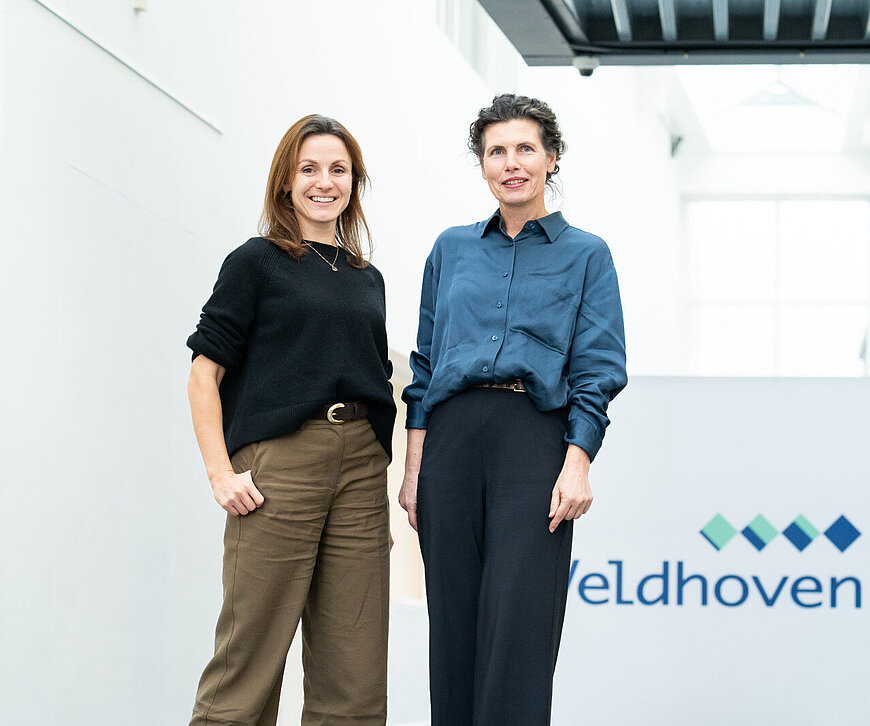
Within the municipality of Veldhoven, sustainability strategist Nancy van der Linden and economic policy advisor Chantal Ottens are working closely together on these energy issues. Based on the area vision that extends to 2040, they link the sustainability challenge to the spatial and social development of the area, from the arrival of new residents to the ambitions of businesses. In this way, they are looking for ways to prepare the energy system for everything that Veldhoven will require in the coming years.
Veldhoven is changing faster than the grid can keep up
Veldhoven's energy bill can be summed up in one simple equation: electrification means that businesses, residents and mobility are consuming more and more electricity, leaving little room for growth. At least, not yet. The grid is full. Businesses can hardly expand, new organisations are sometimes unable to start up, and travel within the municipality is limited by scarce connection capacity.

That is precisely why De Run, the business park where ASML is located, is such an interesting case study. The growth of this high-tech company has created enormous momentum. At the same time, the municipality has been tasked by the government with establishing a fast bus connection between Eindhoven and ASML. More than 2,000 homes are to be built along this line, in line with the idea of concentrating living, working and mobility around high-quality public transport connections. Much of this space is located on the business park itself.
‘The bus lane will run right across the site,’ says Ottens. ‘That means we have to build homes in places where businesses are currently located. Some of those businesses can be combined with housing, but not the heavier industry. So they will have to relocate. And relocation requires energy.’
That makes Habraken, the second business park in Veldhoven, a strategic location. The municipality can allocate land here to companies in higher environmental categories; companies that are looking for space to grow and become more sustainable. But those companies also need a heavier electricity connection. And that cannot always be provided at the moment. Where one municipality would come to a standstill in such a situation, in Veldhoven it is an opportunity to look at things differently.
The connection between two worlds
When you speak to Van der Linden and Ottens, you immediately notice that both disciplines complement each other effortlessly. Not by thinking the same way, but by reinforcing each other's perspectives. Van der Linden looks at the sustainability challenge from a broad perspective: how do you avoid ad hoc solutions that will no longer be suitable in ten years' time? How do you build an energy infrastructure that serves the whole – homes, businesses, mobility, heating, industry – without one sector taking over the space of another?
Ottens looks at it from a business perspective: what do entrepreneurs need right now to be able to continue doing business? How do you ensure that growth remains possible, that businesses can relocate, innovate or become more sustainable? And how do you ensure that the energy demand of those businesses is taken into account in a realistic, phased and future-proof manner? When these two perspectives come together, an integrated approach to energy emerges that safeguards both the space for businesses and the long term for the entire municipality.
‘Many energy issues are technical in nature,’ says Van der Linden. "But in practice, it is primarily a human issue. It's about behaviour, interests, cooperation, trust. And that's exactly where the link with the economy helps.‘ Ottens adds: ’I hear what companies need, what they're struggling with, what keeps them awake at night. I want to bring that reality into the bigger picture. That's how you get things moving."
Energy cooperation: less theory, more practice
Energy cooperation (companies that jointly organise generation, storage or consumption) is often cited in the region as the best way to reduce grid scarcity. But at De Run, it soon became apparent that the step from theory to practice is a big one. The municipality started in the traditional way: inviting companies, collecting quarter-hourly data, seeing who had a surplus of energy and who had a shortage. But after analysis, it turned out that for some companies it was technically impossible to collaborate. They were not grid neighbours, which is a strict condition imposed by the grid operator for energy exchange.
Nevertheless, that first round was received positively; companies gained insight into their own energy consumption, something that was new to many. And that led to savings, more efficient operations and investments in sustainability behind the meter at various companies. Not because they had to, but because insight simply leads to better choices.
Meanwhile, it became clear that Veldhoven needed additional knowledge to accelerate energy cooperation. Through Brainport Development, energy hub director Joost van Montfort joined the team. He is a specialist who masters the technical side of energy and speaks the language of the grid operator. ‘He brings knowledge that we don't have,’ says Ottens. ‘He works in several municipalities, recognises patterns and knows what is and isn't possible within the grid. This allows us to approach companies in a more targeted manner.’ The effect is immediately noticeable. The discussions are becoming more concrete. Support is growing. And insights are becoming more precise.
Habraken as a key area
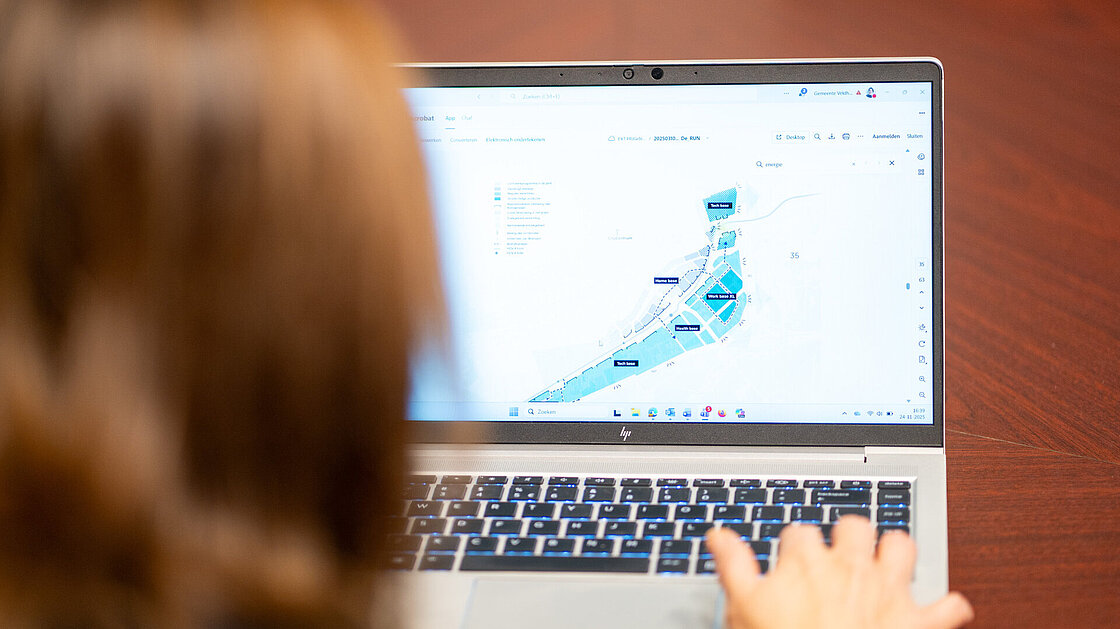
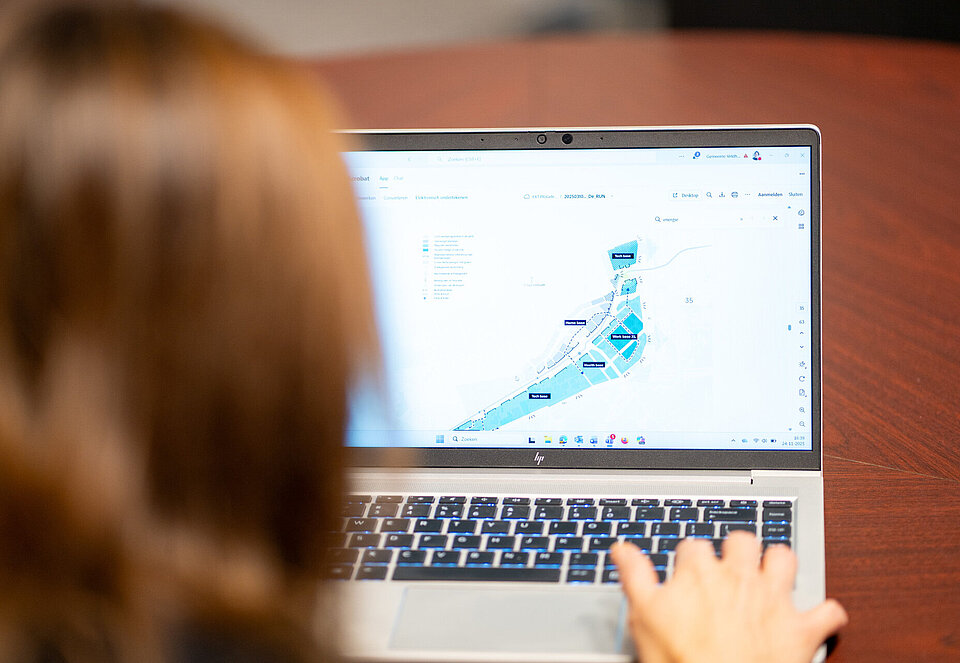
Whereas De Run has a lot of existing buildings, Habraken is an area with new potential. For example, the municipality wants to sell land here to growing companies, or companies that are currently located on De Run but cannot be combined with residential areas. But that is only possible if Habraken is equipped with a robust energy infrastructure. That is why several scenarios are currently being worked on: which companies can establish themselves here, what do they need? What existing capacity will become available at De Run when companies relocate? And how can that be used wisely?
Every piece of the puzzle that you move affects nine other pieces. You have to constantly zoom in and out.
Here too, cooperation plays a central role. And just as at De Run, we are looking at generation, storage and connection options, always with a view to balancing individual interests and collective benefits. Van der Linden: ‘Every piece of the puzzle that you move affects nine other pieces. You have to constantly zoom in and out; from companies to the site, from the site to the region. That makes it intensive, but also logical. Because energy doesn't stop at a company's fence.’
The biggest change is taking place in people's minds
Van der Linden and Ottens also see a clear shift in their conversations with entrepreneurs. ‘Energy cooperation was new to many companies,’ says Ottens. ‘And then it makes sense to look at your own situation first. It's pioneering, but we do notice that awareness is growing. Entrepreneurs are looking for opportunities themselves, asking more specific questions and increasingly including energy in their future plans.’
Van der Linden also sees this reflected in the way companies approach their choices. ‘In the beginning, it was all about: how can I move forward? Now you see that insights are helping them to take a broader view. By analysing data, companies are discovering where there is room for improvement, what they can save or how they can organise themselves more intelligently. That sets things in motion.’
According to Ottens, this development makes all the difference. ‘The fact that entrepreneurs are now coming up with ideas themselves or contributing to solutions is a real step forward. It takes time, but the willingness is growing. And that is exactly what makes further cooperation possible.’

Collaborating in a new playing field
Throughout this entire process, not only companies, but also the municipality itself and the network operator are taking on new roles. And that joint quest is perhaps the greatest gain. ‘We are not used to dealing with energy so intensively in spatial planning,’ says Van der Linden. ‘And the network operator is not used to being involved in the planning process at such an early stage. But we have to. We need each other.’
Cooperation at the municipal level between sustainability and the economy appears to be a solid foundation for this. It makes it possible to connect technical, spatial and economic considerations much more quickly. Ottens: ‘When I hear that a company is stuck, I can immediately feed that back to sustainability. And when Van der Linden sees that something is not spatially sustainable, I take that to the entrepreneurs. It speeds everything up.’
Towards a future-proof energy system
“For me, it's all about entrepreneurs being able to continue doing business,” Ottens concludes. “That there is room to grow, relocate or become more sustainable, without energy becoming an obstacle.” Van der Linden focuses primarily on the bigger picture. ‘We have to make choices that not only work today, but will still be valid in ten years' time,’ she says. ‘If we go for quick fixes now that don't fit into the bigger picture, we'll be setting ourselves up for problems later on.’
The key lies in collaboration. Ottens: ‘You see that all parties are increasingly reasoning from a position of possibilities. That's a real step forward. If we all move a little, we'll get further together.’ Van der Linden nods. ‘It doesn't have to be perfect right away,’ she says. ‘But if we're willing to look at what is possible, we'll make the system as a whole stronger. Ultimately, that's what will benefit Veldhoven the most.’
‘If we all move a little, we'll get further together.’