Makers of the Future | Art as a bridge between worlds: Daisy Roefs on connection in the city
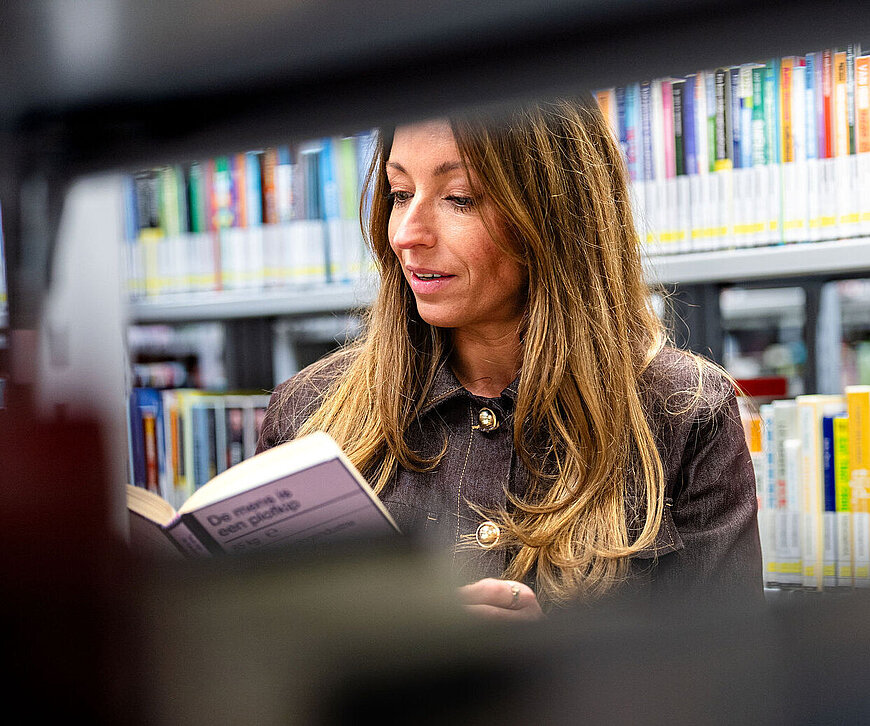
Daisy Roefs is a woman with a mission, you could say. The Helmond native started her career as a hairdresser, but switched gears and went to art school. It was a golden move, because that's when she discovered how she could connect people through her work, specifically in her own city. “In Helmond, you get the chance to make your voice heard and actually do something.”
How exactly does Daisy Roefs (1990) connect people? As an aesthetic activist, as she calls herself. She is happy to explain. "I have always been interested in fashion photography. Now I use elements from it to tell social stories. Gradually, a combination emerged between the aesthetics of fashion photography and the narrative and activist aspects of what I want to convey with my photos. My work is about poverty, culture, and social pigeonholing, which I want to break through. That's where the activist aspect comes in for me. I do that with colorful and stylized images."
She sees society changing around her. She believes there is more polarization and people live very much in their own bubbles. That is why she wants to open up the conversation, so that people do see the other side and are made to think. “Through my art form, I try to get people to talk to each other, so that they can see each other's worlds. Instead of always moving in the same circles and often coming into contact with the same people.”

Helmond artist laureate
In 2024 and 2025, Daisy was artist laureate of Helmond. It was a role she was proud of and one that opened doors. “It was such a wonderful role for me. You are given a platform and the resources to organize projects. It gave me the opportunity to focus more on social issues.” In her daily practice, she wears many hats: she is a creator, organizer, and social worker, all at the same time. “When I organize an exhibition, I invite a diverse audience to engage in conversation with each other. I have many different roles, but I do feel that it is necessary. Because if you don't actively seek out people to bring them together, nothing happens. And so I like to seek collaboration with social organizations and secondary schools.”
"We all need to get back to how to make that connection, instead of shouting even louder and standing opposite each other, only to grow even further apart."
Born and raised in Helmond, she is delighted to be able to give something back to her city. "That's what I love about it: for me, it's just research in my own city. But I also see the city changing. In politics, for example; Helmond is quite a strong PVV voting area. That's partly due to polarization and how people think about each other. That gives me even more drive, because this is so desperately needed. We all need to get back to how we can connect with each other, instead of shouting even louder and standing opposite each other, only to grow further apart."

The makers of the future
What also helps her is that Helmond's cultural vision includes the statement: ‘the makers of the future’. Daisy wholeheartedly agrees with this. "That's a very strong position. I think it's great that Helmond really wants to promote creators. There are many opportunities for them to get involved.“ Looking to the future, she sees an important role for the younger generation in her city. ”I hope that more young people will step up to develop their creative entrepreneurship and artistry. So that these young creators, the creators of the future, will soon become visible here and be given a face. Then we can organize things together that really make an impact."
Daisy is a good example of one of those creators. She finds it valuable to be able to add color to her own city with her work. "I can imagine that it's more difficult in larger cities. Plans are already set there, and it might be harder to get involved. Here in Helmond, you get the chance to make your voice heard and actually do something. When I started photography, I thought: I have to go far away, to Amsterdam and other big cities. But I'm very happy that I stayed in Helmond, because now I can shape my work in such a way that I can really make a difference."