General Atomics taps into the innovation power of Brainport Eindhoven
“Without Brainport Development, this collaboration probably wouldn’t have happened here”
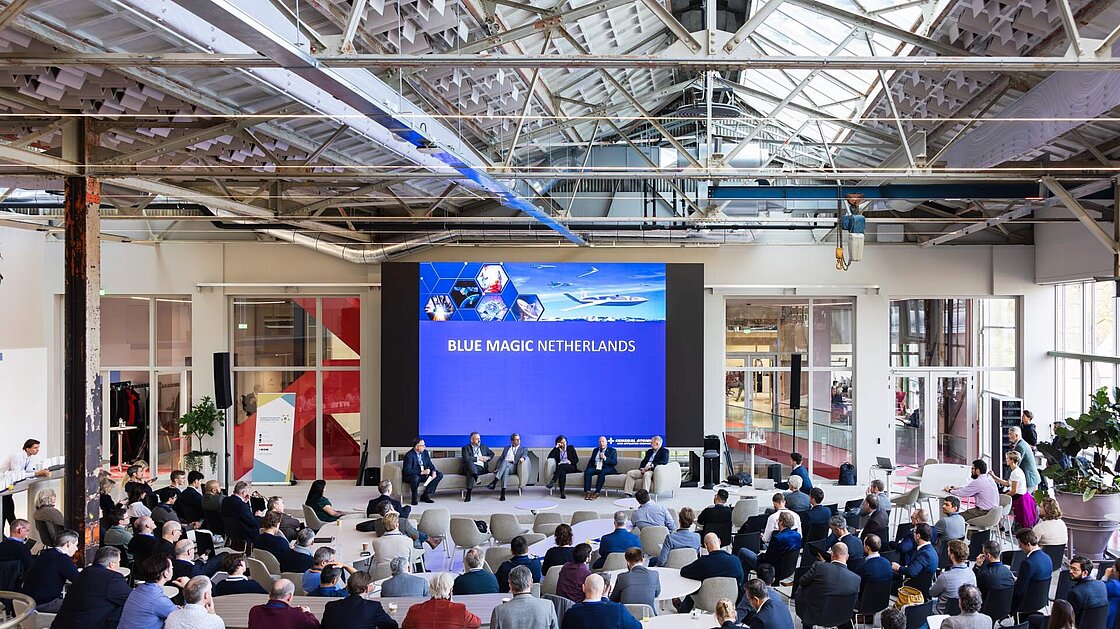
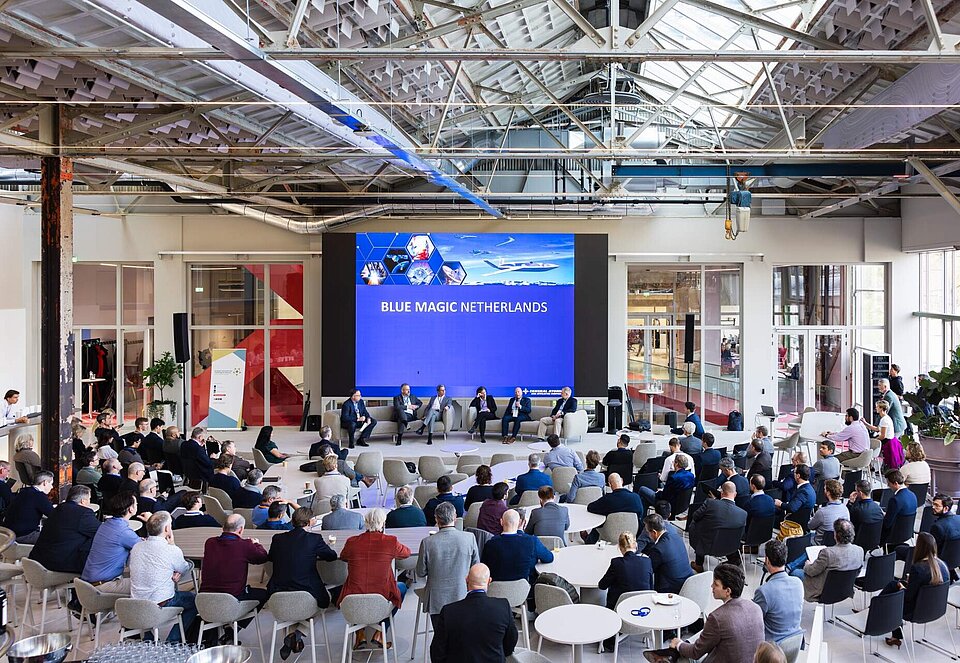
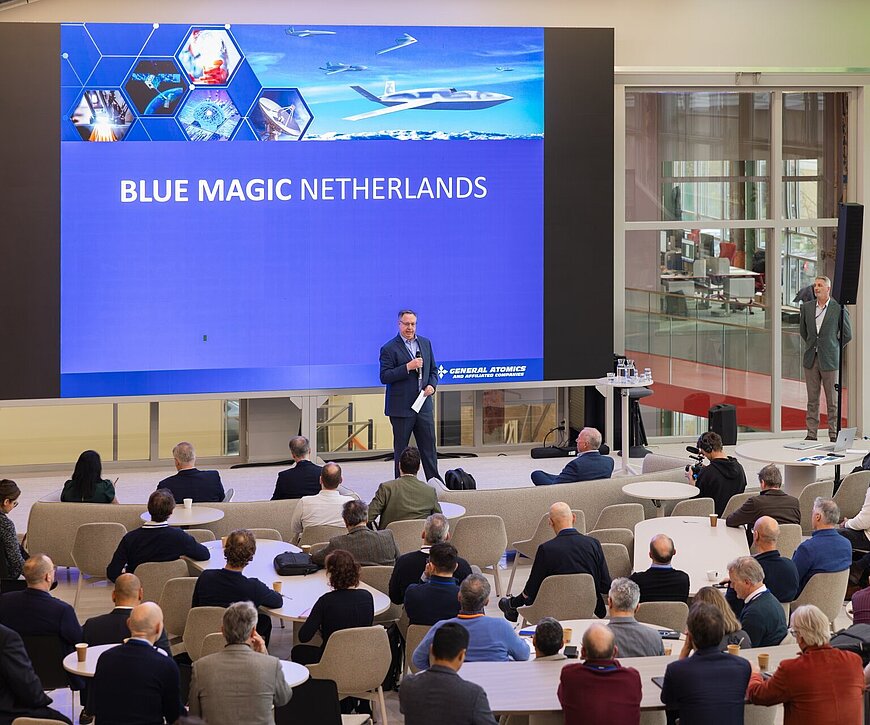
The American technology company General Atomics Aeronautical Systems has been working closely with the Netherlands for many years now, and for the last two years within the Brainport region. In addition to developing a small aircraft together with VDL Groep, intended for large-scale production in response to the war in Ukraine, the second edition of Blue Magic, the innovation event initiated by General Atomics, recently took place. During this event, companies pitch their dual-use innovations to advance them with support from General Atomics. Managing Director Brad Lunn is highly enthusiastic about the collaboration: “It’s crucial to have strong and trustworthy local partners here. The people in Brainport are solution-oriented, cooperative, and operate from a basis of trust.”
A high-tech family company that shaped the unmanned aircraft industry
General Atomics is a family-owned American company active in the high-tech and defense sectors since the 1950s. The company is best known worldwide for the development of unmanned aviation systems. “Our largest business unit is unmanned aircraft, we essentially invented that market and have been the global leader for many years,” says Lunn.
“What makes us unique is that we are a family-owned company, which allows us to pursue long-term, strategically sound initiatives. We operate at a ‘Goldilocks’ scale: large enough to take on ambitious projects, yet small and agile enough to innovate quickly.”

Why the company’s attention turned to Brainport
When Lunn began exploring Europe in search of regions with exceptional innovation potential, the Netherlands quickly stood out. The country is an important customer for General Atomics, and the presence of ASML played a major role. “I knew ASML is one of the most important companies in the world. That was an immediate signal that there must be a strong ecosystem here,” he explains. “When I look for innovation hubs, I always look for strong universities combined with strong companies. Brainport Eindhoven ticks all the boxes.”
But Lunn was looking for more than just a high-tech environment — he needed reliable partners. He found them in Brainport Development, the region’s economic development agency. Their first meeting, at a lakeside restaurant near the High Tech Campus, immediately created mutual understanding. According to Lunn, Brainport Development then played a key role in establishing the innovation partnership. “It’s not an arm’s-length relationship where you start with contracts and legal agreements. You start with a conversation and build from there. That is rare.”
VDL Groep and General Atomics: two family businesses, one shared ambition
Brainport Development introduced General Atomics to VDL Groep, which has since become a strategic partner. Together, they are developing a small, unmanned aircraft that can be rapidly deployed in Ukraine, a project that requires industrial-scale production and uncompromising reliability. “We’re looking for partners who can help us increase our production capability going forward,” Lunn explains. “So we needed a partner whose capabilities complement ours.”
The connection with VDL was immediate. Their shared identity as family-owned, values-driven companies made the collaboration feel natural. “Their strength lies in system integration and large-scale production; ours lies in technology. VDL won’t just deliver components — they will become the full system integrator. That is quite unique in the aerospace sector.”
Collaborating based on trust, not paperwork
What Lunn values most about working in the Brainport region is the approach to collaboration. No distant, contract-driven relationships, but partnerships grounded in trust and shared problem-solving. “Collaboration starts with people — and the people at Brainport are cooperative, solution-oriented, and operate from a basis of trust.”
Shared sense of urgency
He also sees a shared sense of urgency. “They work quickly,just like we do, and that makes it an ideal environment if you want to make real progress.”
Competition, too, is not seen as an obstacle. At Blue Magic, General Atomics and Brainport Development invited other international players, including Lockheed Martin. “If they discover something valuable, it strengthens the ecosystem. It benefits everyone.” This attitude makes Brainport Development is indispensable, says Lunn: “Honestly, without Brainport, I’m not sure we would be doing this here.”
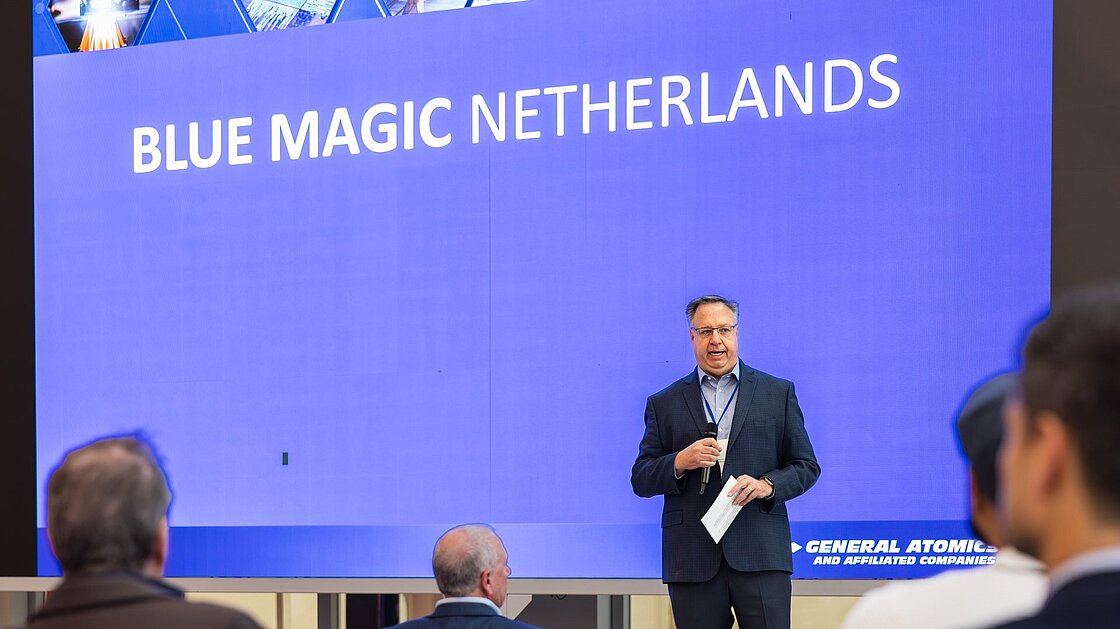
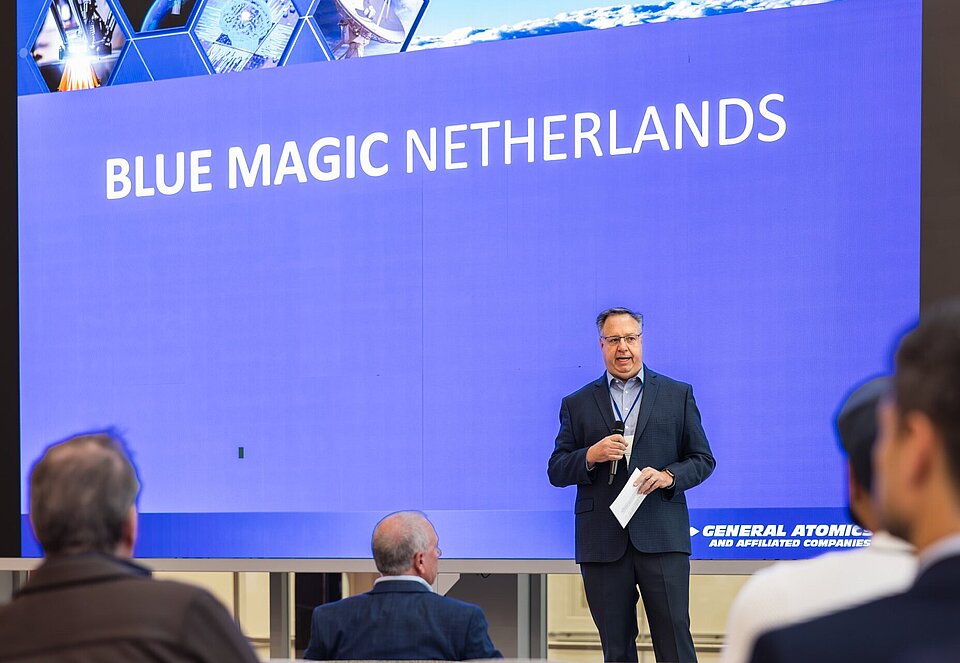
Blue Magic: a window into the technological future
The second Blue Magic event was held in November and is one of the key reasons General Atomics continues to expand its activities in the Netherlands. It brings high-tech companies together with the American firm and uncovers innovation that might otherwise remain hidden.
“Blue Magic gives us a strategic window into the future,” says Lunn. “It brings new contacts, potential investments, and especially early insight into emerging trends. This year, we’ve gained significant insights into next-generation sensor technologies.”
Brainport surprises: ‘I didn’t know a company like VDL existed’
During his visits, Lunn discovered that Brainport offers much more than he initially expected. The breadth of the manufacturing base surprised him most. “I didn’t realize that a company like VDL existed. Their combination of high-tech precision,like their work with ASML, and large-scale industrial manufacturing is extraordinary.”
The concentration of world-leading companies, the culture of open innovation, and the willingness to collaborate make Brainport, in the eyes of General Atomics, a unique ecosystem. “It’s a privilege to be part of an ecosystem that produces such companies,” Lunn says.
Conclusion: a partnership with global impact
The collaboration between General Atomics, Brainport Development, and VDL demonstrates how international tech companies, regional development organizations, and industrial leaders can reinforce one another. What began as a lakeside conversation at the High Tech Campus has grown into a partnership that accelerates innovation and may even influence geopolitical dynamics.
And as Lunn himself puts it: “It works very well for both sides.”