From trial and error to prediction: Tuatara makes medication more precise
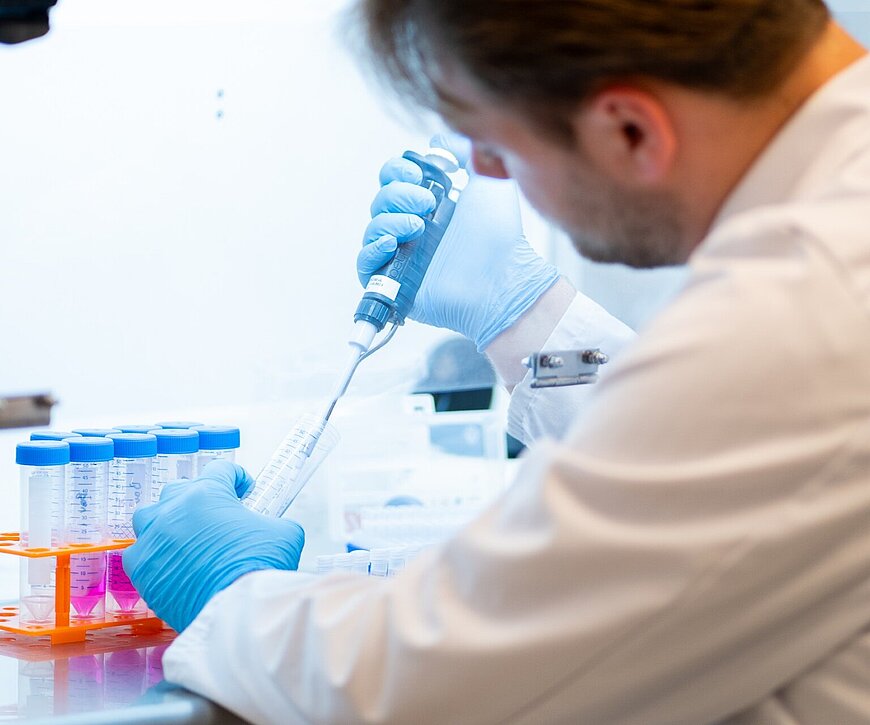

Every day, patients are prescribed medication without it being clear whether the treatment is right for them. Not because of a lack of knowledge, but because the diagnostic information is not yet available at the time of decision-making. As a result, treatment is still too often initiated on the basis of the best possible assessment. Meanwhile, time is ticking away. This results in ineffective dosages, unnecessary side effects, extra consultations and rising costs. It is precisely at that vulnerable moment that Tuatara Diagnostics aims to make a difference.
The Helmond-based MedTech company develops rapid molecular diagnostics for a wide range of societal challenges. A key application lies in healthcare, where there is potential to improve the way medication is tailored to individual patients. Tuatara aims to make this information available at the very moment a doctor or pharmacist is making a decision. Not after the fact, when a course of treatment has already been underway for weeks, but beforehand. “In many cases, you can already determine how someone will respond to medication based on their DNA,” explains founder Gijs Dingemans. “However, with current methods, the results take weeks to come back. Patients often don’t have that kind of time.”
This makes this a story about a problem that occurs every day in healthcare. About patients who start taking antidepressants and only discover which dosage works after several attempts. About people who are prescribed blood thinners, only for it to later emerge that their bodies break them down differently than expected. And about costly treatments that continue for weeks before it becomes clear that the drug has little effect on this patient. “There is little testing, because it takes too long,” he notes. “Essentially, we’re saying: we’ll see how the patient responds.”
One medicine, different outcomes
Genetic differences influence how medication works. “You’re often prescribed medicines based on your body weight. Everyone is actually given a standard dose, whilst it works for one person and not for another,” says Dingemans. “That difference often lies in something you can’t see: DNA.”
This leads to familiar situations. People starting antidepressants sometimes have to return to their GP several times before it becomes clear why a drug isn’t working properly, or is causing too many side effects. It is only later that it turns out their DNA profile is different. With antidepressants in particular, this can have major consequences, because any delay during a period of psychological vulnerability can weigh heavily.
“It can also be crucial for patients who need to start medication quickly after a stroke to know immediately whether a drug is being processed properly,” he emphasises. “It is precisely in those first twenty-four hours that you don’t want to lose precious time.”
A test that brings the decision-making moment forward
That is the core of Tuatara’s technology: bringing diagnostics forward in the care process. Instead of a lengthy remote laboratory process, the company is working on a compact test that can be used locally and in practice, for example in a pharmacy or at the GP’s surgery.
The procedure has been deliberately kept as simple as possible. The test begins with a swab of the inside of the cheek. The collected sample is placed in a tube and then inserted into a cartridge, which is analysed in a compact device. The DNA is amplified at lightning speed, after which specific mutations are examined. These mutations determine whether someone metabolises medication more quickly or, conversely, more slowly.
Whereas traditional laboratory tests often go through specialist centres and take weeks to complete, this approach makes it possible to obtain a result quickly that can be used immediately in treatment. “Within fifteen minutes, the pharmacist knows whether the patient has an abnormal profile,” he explains.
The test focuses on medicines where genetic variations are known to influence efficacy or dosage. This applies, for example, to antidepressants, cardiovascular diseases, neurological disorders and certain infectious diseases. “We now know that for around fifty medicines, an abnormal profile affects how they work,” explains Dingemans. “However, there are currently no rapid tests available for these. Our test is easy to use. This shifts diagnostics from retrospective monitoring to prospective justification. As a result, it becomes clearer more quickly which medication or dosage has the greatest chance of success.”

Benefits for patients, healthcare providers and the system
This shift has implications that go beyond the test itself. Less trial and error means less uncertainty and fewer side effects. “Some treatments cost two hundred euros a day,” says Dingemans. “If you discover after six weeks that it isn’t working, you’ve wasted time and money.”
This innovation thus touches on a broader question: how do you keep healthcare accessible and affordable, whilst the pressure on systems worldwide is increasing? Technology that enables earlier and more accurate decisions is playing an increasingly important role in this.
Born out of practice
The driving force behind Tuatara emerged from day-to-day practice. Dingemans worked in the diagnostics sector for years and saw how good ideas got stuck between the laboratory and practical application. “I was constantly coming across things where I thought: surely this could be better?” In 2022, he decided to build a solution himself and founded Tuatara Diagnostics with a small team of scientists.
The focus is on innovation, development and validation. To scale up, the company is seeking partners who can accelerate market access and distribution. This agility fits well with a region where collaboration is often the quickest route to impact.
The next step: from development to practice
Right now, Tuatara is actively seeking contact with healthcare professionals who can help ensure the test is successfully integrated into everyday care. The technology is currently at the point where development is giving way to practical application: the first prototype is being tested by a Dutch partner, with the expectation that the application will become more widely available within one and a half to two years. “The input from those who will soon be working with our test is essential,” explains Dingemans. “Think, for example, of pharmacists, GPs, neurologists or cardiologists.”
This involves practical questions. At what stage in the care pathway does such a test really make a difference? How should a result be presented so that a doctor or pharmacist can act on it immediately? And what is needed to integrate the test effectively into existing work processes? In addition, Dingemans sees an important role for patient and advocacy organisations. They bring the patient’s perspective to the table and can help highlight the urgency of the situation from a practical standpoint.

Why this can be accelerated in Brainport
This way of working ties in seamlessly with the strengths of the Brainport region. For Tuatara, Brainport is not just a location, but an ecosystem where research, entrepreneurship and application are closely intertwined.
The company collaborates with Fontys, amongst others, on aspects of DNA extraction and test development. Connections are also being forged with Sure Laboratories that are accelerating development. “The fact that we could rent space from Sure Laboratories at an affordable rate and make use of their laboratory facilities gave us a flying start,” says Dingemans. “A synergy has now developed: we use Sure’s labs to cultivate bacteria and viruses for our tests, and they use our equipment for DNA research. We are also exploring new developments together.”
It is precisely this kind of practical collaboration that enables speed. Not only in technological development, but also in the smarter utilisation of facilities, knowledge and networks. In addition, Brainport Development and BOM play a role in networking, grant applications and international orientation through the organisation of professional meetings or medical missions. For the development of the test for personalised medicine, Tuatara also received support from InterregCrossRoads2, among others, which helps to further develop and validate the test and bring it into practical use more quickly. As Dingemans explains: “Innovations here do not get stuck at the proof-of-concept stage, but are brought into practice more quickly through short lines of communication.”
From Helmond to Europe
To realise the technology’s full potential, an international perspective is essential. “The Netherlands is a small country,” says Dingemans. “If you look at certain conditions, something might occur here a few hundred times a year. But at European level, the numbers are many times greater.”
Europe is therefore a logical next step, but also a complex one. Every country has its own regulations, reimbursement systems and adoption pathways. That is why Tuatara is seeking partners with existing networks that can help introduce the technology into different markets.
A small moment with far-reaching consequences
Dingemans outlines his ambition in very concrete terms, using a scenario that could well become a reality very soon: a patient walks into a pharmacy, is given a rapid test, and during that very same visit it becomes clear which medication or dosage is most likely to be successful. “I would love to see our test become standard practice in pharmacies,” he says. “For people to receive personalised medication. Faster, more effective and with fewer side effects.”
If that succeeds, it will change more than just the way medication is prescribed. Healthcare will then gradually shift from treating based on assumptions to treating based on direct, patient-specific data. And that is precisely where the greater promise of Tuatara Diagnostics lies: for patients, healthcare professionals, insurers and for a region that demonstrates how high-tech innovation can have a societal impact. Not waiting for results, but knowing what works the moment it matters.