Inside Team T.E.S.T.: Building a Biosensor

Hey everyone,
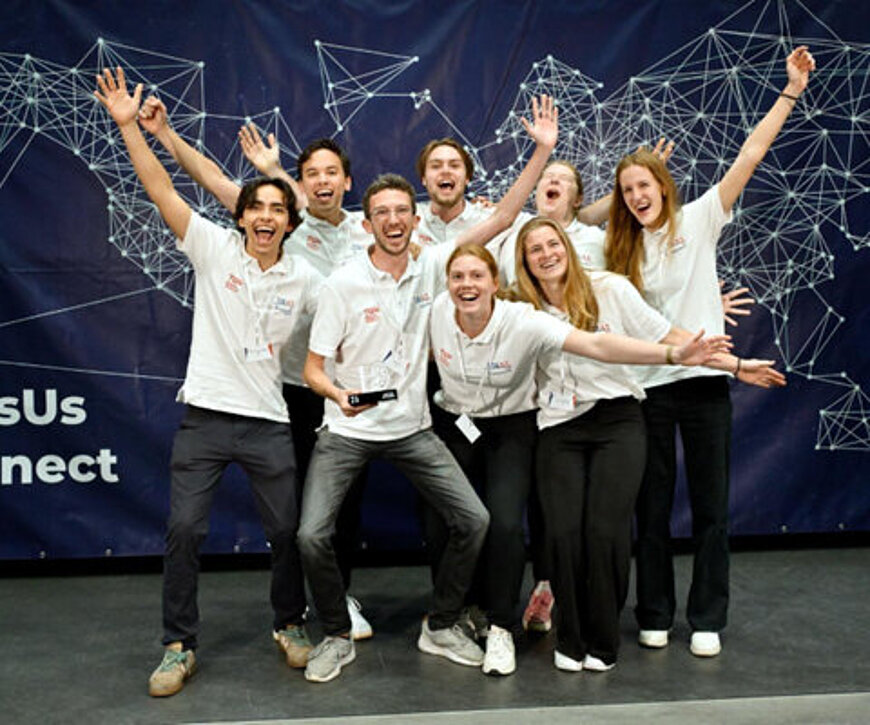
I’m Austėja, a Chemical Engineering student from Lithuania and a member of Team T.E.S.T.. More specifically, I’m part of the assay subteam, which means I’ve spent a lot of time in the lab this year. Today, I’d love to take you behind the scenes of our journey and share what it’s like to be part of Team T.E.S.T. !

Just like every year our challenge was set by the SensUs competition: to design a biosensor that continuously monitors creatinine, a key biomarker for kidney health. It sounds straightforward, but trust me, the road from idea to prototype is anything but easy.
Life in the Team
Throughout the year, we work part-time alongside our studies, and in the summer things as always get a bit more serious — full-time, long hours, and plenty of sugar! To help achieve our goals, and manage our workloads, our team is split into two main crews:
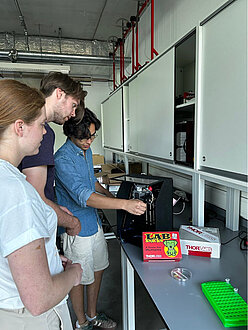
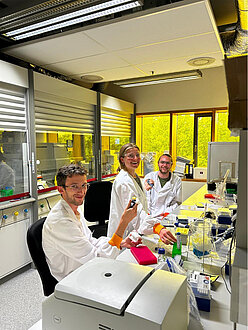
- The assay team, who spent countless hours in the lab designing protocols, running experiments, and analyzing measurement data.
- The detection team, who tackled the hardware, coding, microfluidics, and even the user interface.
On top of that, we all take on extra “side quests” — from public relations to managing finances — which made our team feel, and function, a lot like a startup.
What makes being a T.E.S.T. member special is that our team is small, which means you quickly become more than just colleagues. We’ve celebrated successes together, powered through late nights, and built friendships that make the tough days a lot easier.
Development of our Sensor
The road to our final prototype has been full of twists and turns. At first, we set out with a completely different approach, planning to use FRET (Förster Resonance Energy Transfer) as our transduction mechanism. But as the competition deadlines quickly approached, we faced a tough reality: our initial design wasn’t progressing as we had hoped. That’s when we made the difficult call to switch to BPM (Biosensing by Particle Motion).

While the detection team were really on top of their game, things in the lab were a bit slower. For weeks, we weren’t sure if we’d even see the results we were hoping for. Then, just one week before the competition, it finally happened — we got the response that proved our sensor concept worked.
It came late, almost at the finish line, and many of us had doubts along the way. But that breakthrough showed us the power of persistence. Sometimes, you just have to keep believing in your idea until the very end.

Innovation Days
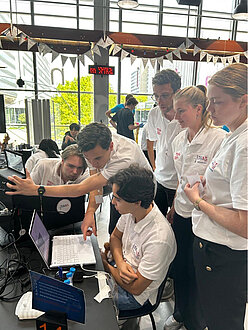
By the time August rolled around, we were ready to put everything to the test at the SensUs competition. It’s not only about presenting your work; it’s also about connecting with other teams from around the world who have been working on the same challenge. Seeing their approaches was inspiring, and the atmosphere was filled with collaboration rather than competition.
Our achievements 2025
And the hard work paid off! This year team T.E.S.T. became the winner of the Distributing Testing Event, the winner of the Translational Potential Award, and the second place winner in Analytical Performance!!!
Those awards felt incredible to win, but honestly, the biggest reward was the journey itself. We’ve learned so much — not just about science and technology, but also about teamwork, persistence, and creativity.
At the end of the day, being part of Team T.E.S.T. isn’t just about building biosensors. It’s about building ourselves — as engineers, as researchers, and as people who want to make a difference and truly be a part of something that improves people’s quality of life.
Follow the team!
Read all the latest updates from the T.E.S.T. team here!