From Brainport to Yokohama: the Dutch approach to systems engineering is gaining international recognition
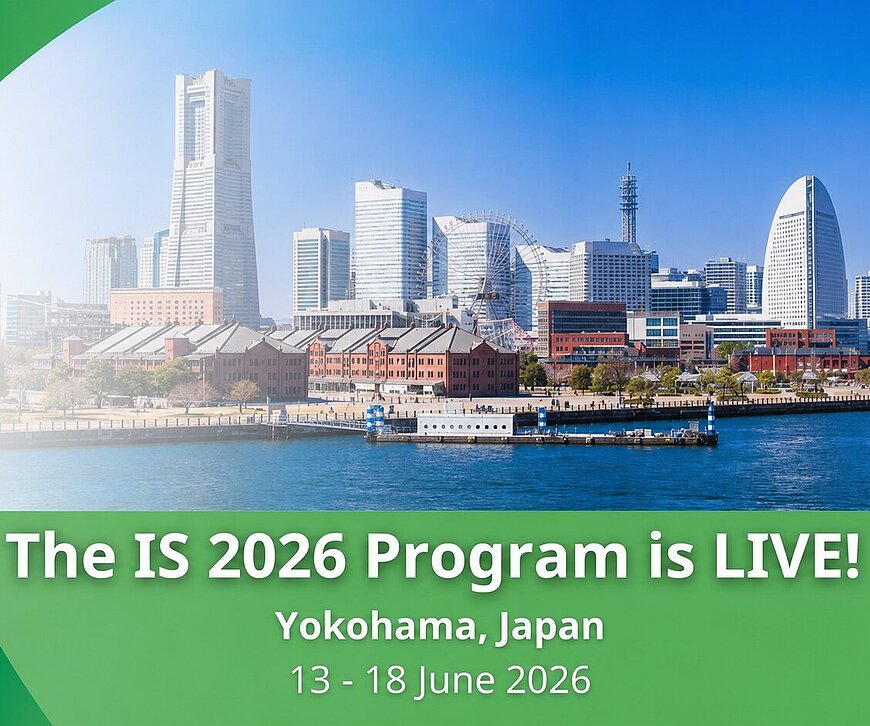
What began as a response to the need within the high-tech industry in Brainport Eindhoven to further strengthen systems engineering has since grown into a national collaboration within NXTGEN Hightech. From 13 to 18 June 2026, this approach was showcased on an international stage at the INCOSE International Symposium in Yokohama, Japan. There, SE NXTGEN presented the initial results of the DASE Compass and the EduFramework – and laid the foundations for further international validation.
Systems Engineering is a key driver within the Dutch high-tech equipment industry. At the same time, systems are becoming increasingly complex, and there is a growing need for systems engineers and for ways to make systems engineering knowledge and skills more transferable between companies, professionals, educational institutions and research organisations.
In response to this challenge, Brainport Development – as the initiator, lead organisation and driving force – has spearheaded the development of SE NXTGEN in collaboration with partners. The initiative is now part of the national NXTGEN Hightech programme, through which Brainport’s collaboration has been extended to the Dutch high-tech equipment industry.
Initial results presented internationally
Two key findings took centre stage in Yokohama. The DASE Compass, presented by Saber Darmoul of the University of Twente, brings together various dimensions of Systems Engineering: from business context and SE processes to roles and competences.
The Systems Engineering Educational Framework (EduFramework), presented by Joana Teixeira of TNO ESI and Sapfo Tsoutsou of Eindhoven University of Technology, links SE roles to both technical and non-technical competencies and illustrates how these competencies can be developed in an integrated manner.
The international response was positive. The presentation of the DASE Compass attracted around 60 participants, and valuable discussions took place with international experts on both topics. The visit was also used to establish contacts for the in-depth international validation surveys that will take place over the coming six months.
Developed in collaboration with the high-tech industry
A key strength of SE NXTGEN is that the approach is developed not only for, but explicitly in collaboration with, the high-tech equipment industry.
The University of Twente, TNO ESI, Eindhoven University of Technology, Holland Innovative and Fontys are collaborating on the development of the programme’s content. From the industry, organisations including ASML, Prodrive Technologies, Canon, Vanderlande, Thermo Fisher Scientific/FEI, VDL ETG, Philips, Thales, KROHNE, DEMCON, Sioux and FEI Electron Optics are contributing their practical expertise. HI Delta is also involved.
This collaboration reflects one of Brainport Eindhoven’s strengths: bringing together companies, research organisations and educational institutions to tackle complex technological and societal challenges.

From international knowledge to practical application
In terms of content, too, SE NXTGEN has opted for a distinctive approach. The aim is not to develop yet another stand-alone competence framework. Instead, existing international frameworks and insights form the starting point and are jointly developed into pragmatic tools for industry, research institutions and education.
The DASE Compass and EduFramework are designed to help organisations better understand which systems engineering competencies are required, how these relate to different roles, and how professionals can continue to develop in this area.
The ambition thus goes beyond the training of individual systems engineers. The aim is to raise Systems Engineering to a higher level, both as a competence and as an organisational capability. This will help the Dutch high-tech equipment industry to manage the increasing complexity of systems and further strengthen its innovative capacity.
From Brainport to an international network
The presentation in Yokohama thus marks the next step in a development that was initiated in Brainport, scaled up nationally within NXTGEN Hightech, and is now becoming increasingly interconnected at an international level.
For Brainport Development, the project underlines the role the organisation aims to fulfil in South-East Brabant: bringing parties together around strategic challenges, driving joint initiatives and helping to scale these up when collaboration beyond the region is required.
In the coming period, DASE Compass and EduFramework will be further validated and developed. Work is also underway on new learning pathways and the Configurator, which is designed to make the underlying knowledge practically accessible to organisations and professionals.