TomTom accelerates the route to smart mobility with Orbis Maps
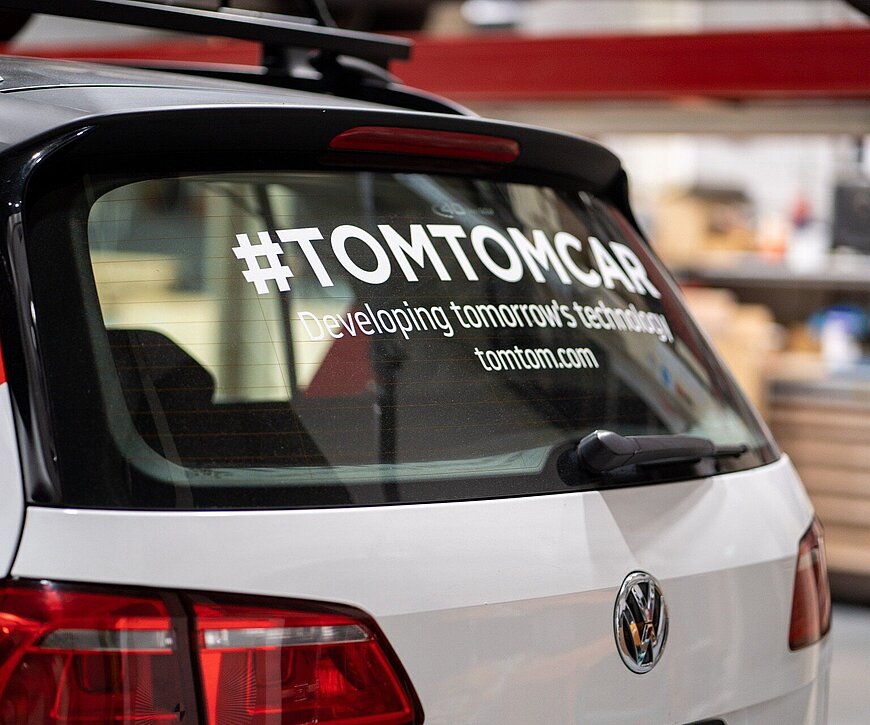

TomTom, the specialist in mapping and location technology, announced that CARIAD, the automotive software company of the Volkswagen Group, will use TomTom’s advanced Orbis Maps as a core component of the automated driving systems it develops for future Volkswagen Group vehicles. TomTom Orbis Maps provides the fundamental spatial context to amplify and enlarge the understanding that CARIAD’s systems have of their surroundings by providing highly accurate, up-to-date location information.

Next‑generation automation with Orbis Maps
The collaboration leverages TomTom’s latest map built on the common mapping standard that the company created with its Overture partners: TomTom Orbis Maps. TomTom’s AI‑native, real‑time mapmaking platform enables the creation of detailed attributes essential for automated driving, including lane geometry, lane‑level attribution, and behavioral data, all referenced to a stable open map standard.
The platform draws from a multi‑source ecosystem—high‑precision car sensor data, survey vehicles, and aerial imagery—allowing Orbis Maps to provide minute‑level updates and maintain exceptional coverage across more than 235 countries and territories. This continuous monitoring ensures rapid detection and integration of real‑world changes.
The technology was presented earlier this year at CES 2026 in Las Vegas, a leading technology trade show where the latest digital innovations are showcased annually. The development aligns with the ambitions of the Digital Infrastructure for Future-proof Mobility (DITM) consortium, in which TomTom participates.
Acceleration through ecosystems and public–private collaboration
TomTom is one of the companies participating in the DITM consortium, which is jointly coordinated by Brainport Development, TNO and RAI Automotive Industry NL. The consortium consists of 19 partners from industry and knowledge institutions working together on the digital infrastructure of tomorrow’s mobility. DITM focuses on developing a digital infrastructure that makes mobility smarter, cleaner, and safer. Although technological developments like these are often the result of years of R&D, the collaboration with CARIAD highlights how participation in an ecosystem such as the DITM consortium can support and potentially accelerate innovation.
“This development fits perfectly within our ambition to redefine navigation for the era of autonomous and connected driving. Thanks to our participation in DITM, we can realize these kinds of innovations more quickly.”
Roland van Venrooy, Principal Program Manager at TomTom
From automotive to defense
In addition to the collaboration with CARIAD, TomTom is also exploring new markets. Recently, it was announced that the company is deploying its geographic data and mapping capabilities for defense and government purposes, including through a collaboration with East View Geospatial for the Australian government. This broadens TomTom’s position in applications where precision and reliability are of crucial importance.
From mobility to the system
The technology is already here. The real breakthrough lies in connectivity. Discover how DITM brings together mobility, energy, data and digital infrastructure, and what lessons four years of development and validation have taught us as we move towards large-scale implementation.
Read the white paper