From Technical Feasibility to Real-World Application: Mitsubishi on the Impact of GTD-H

Hydrogen is widely regarded as one of the key solutions for decarbonising heavy-duty transport. Within the Green Transport Delta – Hydrogen (GTD-H) programme, Mitsubishi collaborated with several partners to develop and validate hydrogen combustion technology for maritime applications. Looking back, the company considers GTD-H an important step in moving from technical feasibility to practical implementation.
Why did Mitsubishi join GTD-H?
For Mitsubishi, the primary motivation to participate in GTD-H was the opportunity to work alongside partners such as TNO and Koedood on the development of a hydrogen combustion engine based on an existing Mitsubishi engine platform.
From an early stage, it became clear that hydrogen technology - particularly in a maritime environment - requires expertise from multiple disciplines, including engine development, fuel systems, safety, and system integration.
“Through GTD-H, we were able to combine the knowledge and experience of multiple partners and accelerate the development process.”
The available financial support also provided an important incentive to invest in the development and validation of this technology and bring it closer to practical application.
What were the project's tangible results?
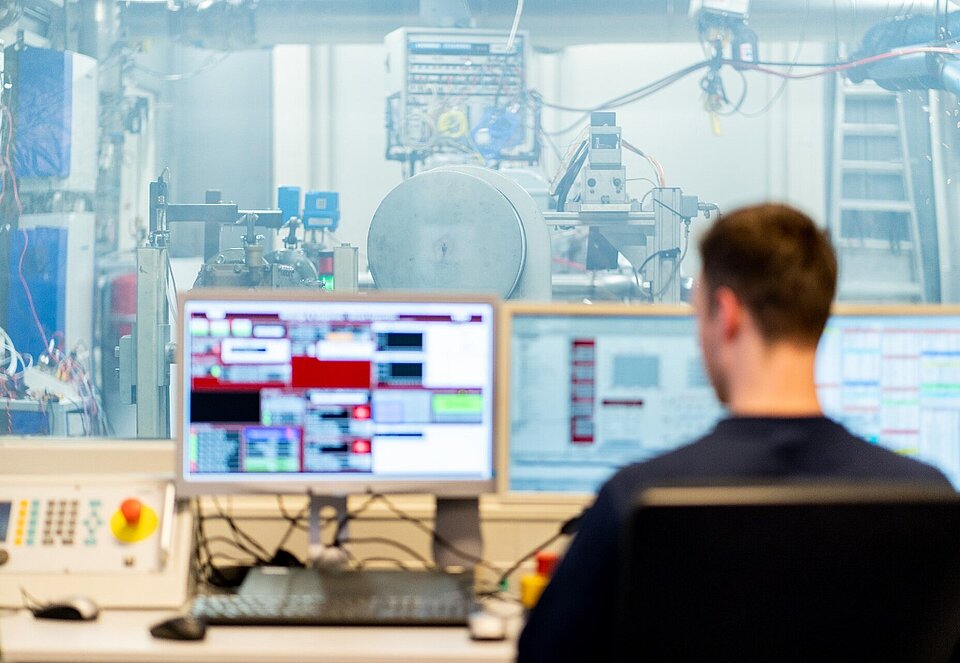
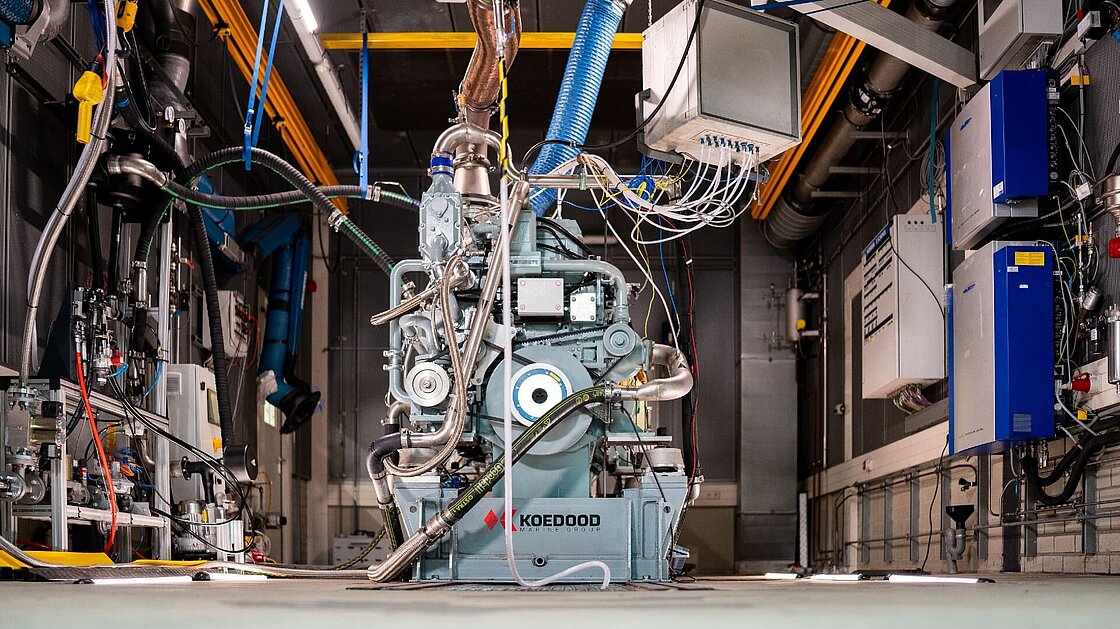
One of the most significant outcomes of GTD-H is the successful development and demonstration of a hydrogen combustion engine for maritime applications.
The targeted power output has been achieved, and the engine operates reliably and consistently without the need for an exhaust aftertreatment system. Eliminating such a system offers clear advantages: it saves valuable onboard space, simplifies installation, and reduces maintenance requirements.
Another major milestone was the certification of the engine by a recognised maritime classification society.
“The certification confirms that the engine is safe and suitable for use in maritime applications.”
In addition to the hardware development, the project generated valuable insights into hydrogen combustion, fuel supply systems, emissions control, and overall system optimisation. This knowledge is now being directly applied in follow-up developments.
From engine to an integrated maritime system
The results of GTD-H extend well beyond the development of a standalone engine.
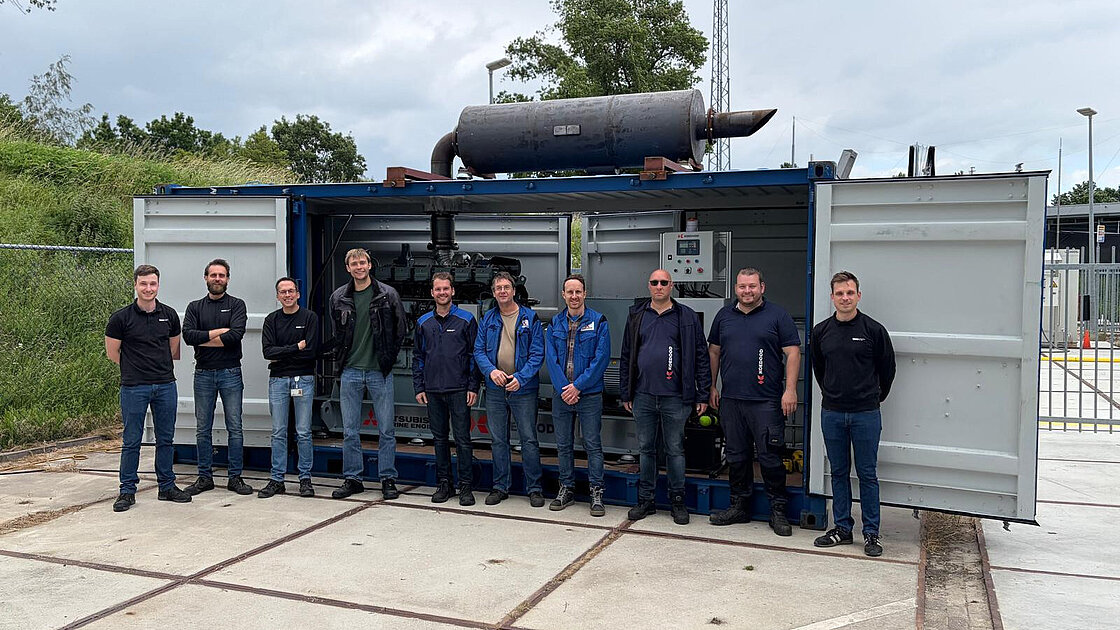
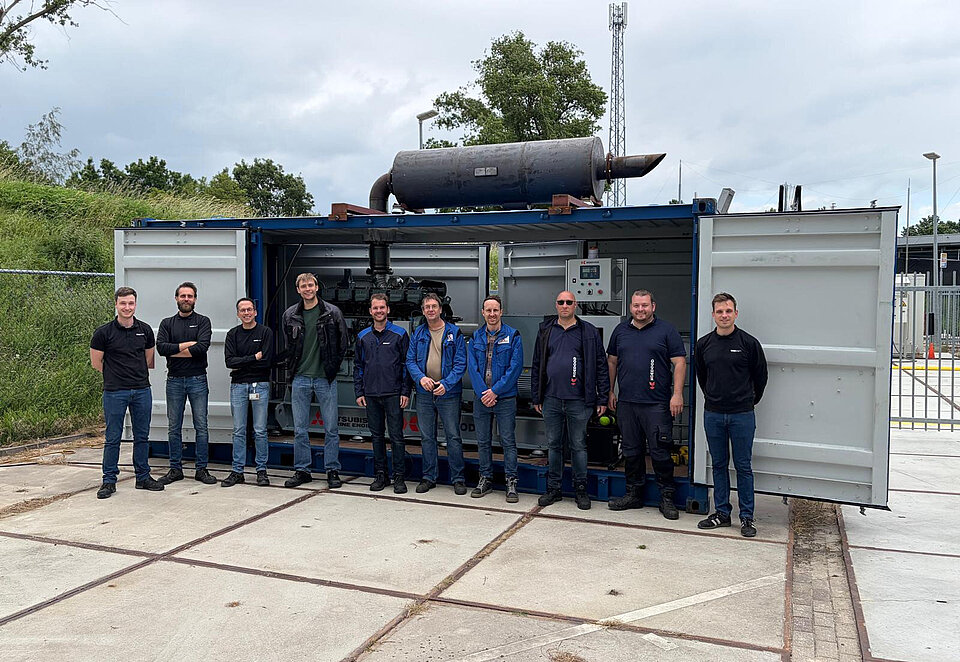
The next step is integrating the hydrogen combustion engine into a maritime generator set. In this configuration, the engine is coupled to a generator designed for use either as an auxiliary genset or as part of an electric propulsion system for inland waterway vessels.
This represents an important milestone, as the technology is now being validated within a representative operational environment.
“This allows us to validate not only the engine itself, but also its interaction with the electrical system and its suitability for real maritime applications.”
The next phase will focus on installation and testing under actual operating conditions onboard a vessel, further bridging the gap between concept development and practical implementation.

What lessons have been learned about hydrogen?
One of the key findings is that hydrogen is technically well suited for heavy-duty applications, but its characteristics differ significantly from those of conventional fuels.
Combustion speed, ignition behaviour, and emissions characteristics all require specific attention during the design of both the engine and the overall system.
At the same time, the project confirmed that success depends on more than engine performance alone.
“The interaction between the engine, the fuel system, and the intended application is crucial for achieving a reliable and practically deployable solution.”
The prototype's excellent dynamic response and low emissions demonstrate what can be achieved through careful system integration.
The design of the fuel system also proved to have a major impact on practical applicability. By operating with relatively low hydrogen pressures, greater flexibility can be achieved in terms of hydrogen storage and infrastructure.
Finally, the project highlighted that the pace of market adoption will also depend on factors beyond the technology itself, including hydrogen availability, infrastructure, and regulatory frameworks.
How has Mitsubishi's hydrogen strategy evolved?
Since the launch of GTD-H, Mitsubishi's approach to hydrogen has evolved considerably.
Where the initial focus was on demonstrating technical feasibility, attention has gradually shifted towards application-driven solutions. The development of the hydrogen combustion engine and its integration into a generator set have provided valuable insights into the practical performance of the technology.
As a result, the company's current focus is increasingly centred on system integration and real-world deployment.
“Hydrogen has evolved from an exploratory topic into a concrete pillar of our long-term strategy for heavy-duty applications.”
Looking ahead: ambitions for hydrogen in heavy-duty transport
Mitsubishi's ambition is to further develop hydrogen combustion technology into reliable and commercially viable solutions for heavy-duty applications.
For the maritime sector, this means developing onboard systems that deliver high performance, reliability, and ease of use without compromise.
The company also sees opportunities beyond maritime applications.
“We see strong potential in other heavy-duty sectors where high power output, durability, and long operational lifetimes are essential.”
The knowledge and experience gained through GTD-H are now being used to support the broader deployment of hydrogen as an energy carrier, particularly in applications where full electrification is not yet a practical option.
What is needed to enable further scale-up?
The next crucial step is demonstrating and validating the technology under realistic operating conditions.
Testing complete systems onboard vessels and in other real-world environments is essential to prove long-term reliability, performance, and operational suitability.
At the same time, the availability of hydrogen, further development of infrastructure, and clear regulatory frameworks remain key prerequisites for large-scale deployment.
Collaboration continues to play a vital role.
“Projects such as GTD-H bring together complementary expertise and help identify practical challenges and system integration issues at an early stage.”
This collaborative approach helps shorten the path from prototype development to commercially viable solutions.
Contributing to the Dutch hydrogen economy
According to Mitsubishi, GTD-H has also made a meaningful contribution at the national level.
By bringing together technology developers, system integrators, and end users, the programme has generated valuable knowledge, practical experience, and confidence in hydrogen technology.
It has also demonstrated that hydrogen technology is not confined to research laboratories but can be successfully applied in demanding heavy-duty applications.
“GTD-H has provided important building blocks for the further development and deployment of hydrogen technology, strengthening the Netherlands' position in hydrogen-powered heavy-duty mobility.”