GTD-H completed: Dutch hydrogen innovations ready for the next step
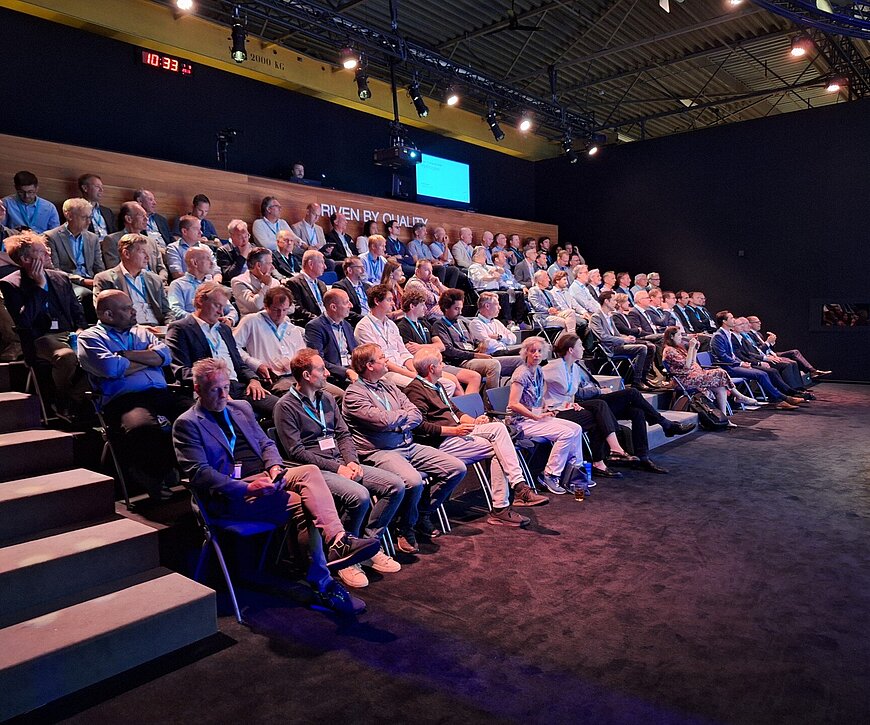

After five and a half years of research and development, the Green Transport Delta – Hydrogen (GTD-H) project has been completed. Led by DAF Trucks NV, 18 partners worked on hydrogen technology for heavy-duty transport and other applications. The project yielded working demonstrations, new measurement solutions and valuable knowledge. In doing so, GTD-H demonstrates the opportunities the Netherlands has to play a leading role in European hydrogen technology for heavy-duty transport. At the same time, further development and favourable market conditions are needed to capitalise on these opportunities.
During the closing event at DAF Trucks in Eindhoven, the partners presented the results of their collaboration. GTD-H focused on the development and testing of hydrogen internal combustion engines, fuel cell systems, hydrogen storage and refuelling technology. This has not only led to the development of new technology, but has also yielded insights into its performance, safety, reliability and practical applicability.
Hydrogen engines: from development to field testing
A key component of GTD-H was the development of hydrogen internal combustion engines for heavy-duty transport. As part of this, the partners investigated how existing engine technology could be adapted for use with hydrogen.
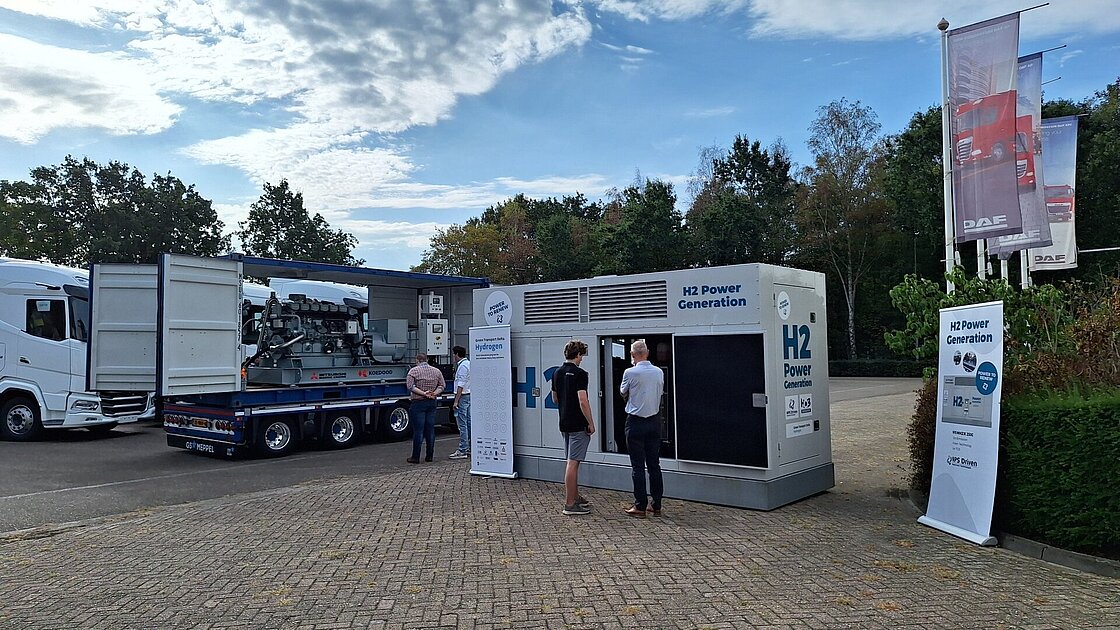
Within GTD-H, a system was developed that injects hydrogen directly into an internal combustion engine. The tests showed that this technology is promising for heavy-duty vehicles and applications requiring high power output.
The technology was also tested in a lorry. During trials in Sweden, at temperatures below -10 °C and with a fully laden semi-trailer, the partners investigated, amongst other things, the starting, driving and operation of the hydrogen system. This provided valuable practical experience.

The results show that hydrogen can be used as a fuel in engines based on existing diesel technology. This is relevant for manufacturers and suppliers who already possess expertise in engines, injection systems and powertrains.
However, there are still technical issues to be addressed. For example, the combination of high efficiency and low nitrogen oxide emissions requires further optimisation and exhaust gas after-treatment. Additional steps are also needed before the technology can be produced on an industrial scale.
Fuel cells: significant progress and new insights
In addition to internal combustion engines, the partners worked on fuel cell systems. One of the lines of research focused on Solid Oxide Fuel Cells (SOFCs), a technology capable of generating electricity with high efficiency.
Within GTD-H, a modular fuel cell system was developed for use in a hybrid terminal tractor. The components and the fuel cell module were tested separately. The vehicle was also tested at a practical test site.
The field trial had one major limitation: due to damage sustained in transit, the SOFC module could not be switched on during the vehicle test. Consequently, the trial did not provide full validation of the operational fuel cell system within the vehicle.
The researchers concluded that integration into a mobile powertrain is technically feasible and that dynamic operation and start-stop mode can be achieved. At the same time, the technology proved to be insufficiently compact and mature for commercial application in heavy goods vehicles. Furthermore, due to the late availability of the fuel cell stacks, it was not possible to collect complete service life data.
The project did, however, yield new test facilities, system knowledge and a modular design methodology. This provides the partners with a basis for follow-up research, including applications outside road transport.
Reliable hydrogen refuelling: measuring equipment tested in practice
The refuelling infrastructure was also part of the GTD-H project. This included, amongst other things, the speed of the refuelling process and the accurate determination of the quantity and quality of the hydrogen supplied.
Accurate measurements are essential for reliable hydrogen refuelling. As part of the project, measuring equipment was developed that allows refuelling stations to be checked without venting large quantities of hydrogen. Field tests showed that this equipment can meet the relevant accuracy requirements.

In addition, new measurement solutions have been tested for the accurate recording of hydrogen flows, both during refuelling and during delivery to filling stations. These results contribute to a reliable and more controllable refuelling infrastructure.
Work was also carried out on methods to improve the measurement of impurities in hydrogen. This is particularly important for fuel cells, whose performance and service life can be sensitive to fuel quality.
These developments make the benefits of GTD-H tangible for Dutch technology companies. The project relates not only to vehicles, but also to the measuring instruments, components and installations required to use hydrogen reliably.
What is needed for the next step?
The completion of GTD-H marks the end of an important research phase, but the technologies are not all at the same stage of development. Some systems have been tested in vehicles or real-world situations. Others still require further validation, more compact designs or research into service life and emissions.
Hydrogen engines require further development, upscaling and a competitive hydrogen price. Series production towards 2030–2035 has been mentioned in the project as a possible development prospect, not as a fixed launch date.
Clear conditions are also required beyond the technical sphere: affordable, sustainable hydrogen, sufficient refuelling facilities and a long-term outlook for companies wishing to invest. Without these preconditions, it is difficult to apply promising innovations on a larger scale.
These preconditions are not project results of GTD-H itself, but they do help determine whether the technology developed can reach the market.

Freek de Bruijn, Hydrogen Programme Manager at RAI Automotive Industry NL, looks back:
“Over the past 5.5 years, 18 partners have demonstrated what the Netherlands is capable of when we bring together knowledge, technology and entrepreneurship in the field of hydrogen mobility. H₂-ICE, fuel cells, on-board storage and refuelling infrastructure have all been developed, built and extensively tested. As project leader, I am proud to have been able to lead this collaboration. Not least because it demonstrates that the Netherlands still holds a recognised, strong international position in terms of knowledge and technology in the field of hydrogen in mobility. Now that the project has been completed, the most important phase is actually just beginning: ensuring that these innovations find their way to the market. Long-term political clarity regarding the direct use of hydrogen in mobility, space for hydrogen refuelling stations and access to green hydrogen are crucial prerequisites for this. We have developed the technology. We are very positive about the potential of these technologies. Now we must ensure that the economic activity, employment and earning capacity resulting from them are retained in the Netherlands.”
This next step also requires a broader view of the energy system. The availability and affordability of sustainable hydrogen, and the infrastructure required for it, are becoming increasingly crucial for further development and upscaling. That is why RAI Automotive Industry NL is linking mobility, energy infrastructure and industry within the new Energy Systems programme. The focus is on innovations and system solutions for an affordable, reliable and sustainable energy system, in which hydrogen can play an important role.
Building on the results
GTD-H has delivered concrete technological results, new testing opportunities and knowledge for further development to the Dutch automotive industry. Furthermore, the collaboration between vehicle manufacturers, suppliers and research institutions has demonstrated how expertise from different sectors can be utilised.
The next step is to determine, for each technology, what further development, validation and investment are required to achieve a commercially viable product.
The Netherlands has the knowledge, the companies and the technology. The challenge now is to further develop the results of GTD-H in a targeted manner and, where possible, bring them to market.
About Green Transport Delta – Hydrogen
Green Transport Delta – Hydrogen is a public-private innovation project in which 18 partners collaborated for five and a half years on hydrogen technology for mobility. DAF Trucks NV acted as lead partner. The project forms part of the Green & Smart Mobility Programme Office, led by RAI Automotive Industry NL and Brainport Development.