Number of international students at TU Eindhoven more than doubled in four years
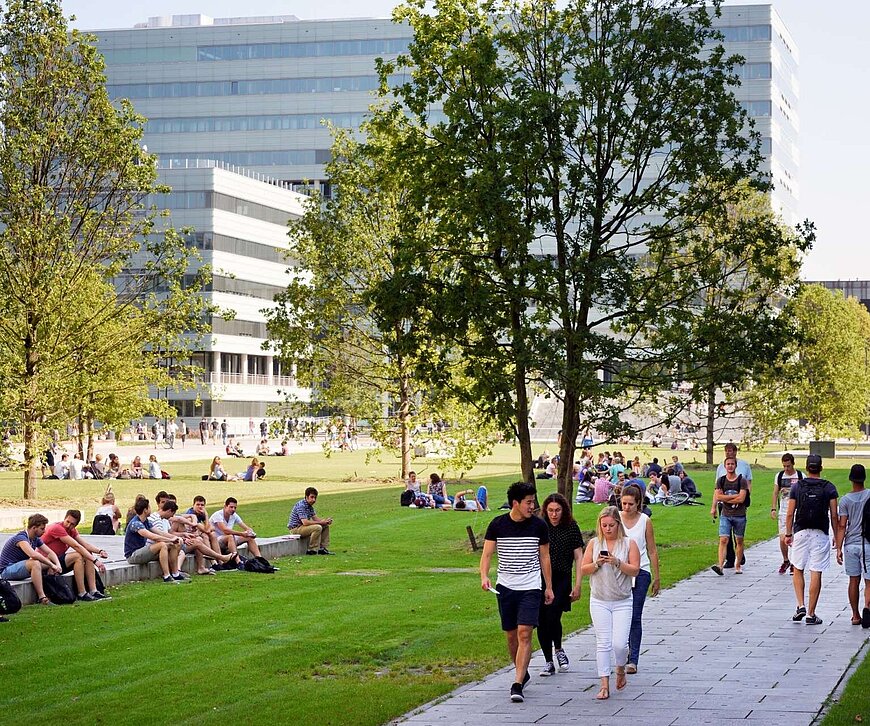

The number of international students at Eindhoven University of Technology (TU/e) has more than doubled in four years. Four years ago, the university had just over 2,500 international students; now the number is close to 5,900. Romania, Turkey and China are the main countries of origin.
TU/e provided the figures in response to questions from Studio040. According to a spokesperson, the university has a “strong appeal to international students”. The quality of education and the attractiveness of the high-tech Brainport region are also cited as reasons for the increase. In total, 42 per cent of all TU/e students now come from abroad.
Countries of origin
Romania is the country from which the largest number of students come, followed by Turkey, China, Poland and India. Spain, Bulgaria and Greece are also well represented.
Over the past year, there has been a notable increase in applications from India. TU/e suspects this may also be related to the changing situation in the United States. Under President Donald Trump, academic freedom is under pressure, making the US less attractive as a study destination.
Before international students can start studying in Eindhoven, they must demonstrate that they meet the required entry qualifications. According to the university, they are highly motivated. “Our experience is that international students who come to us tend to be among the better and more ambitious students in their home countries. On average, they therefore score slightly better than Dutch students,” the spokesperson says.
Brainport
The students are not only ambitious. They also tend to stay relatively long in the region or elsewhere in the Netherlands. Of all universities in the country, TU/e has the highest share of international graduates who go on to work in the Netherlands. Figures shared by Eindhoven University show that 56 per cent of international students with a master’s degree are still employed in the Netherlands after a year and a half. Just under half of that group works in the Brainport region, where demand for engineers is high.
“56 per cent of international students with a master’s degree are still employed in the Netherlands after a year and a half”
Recruitment
Because demand for technical professionals in the region is enormous, TU/e actively recruits students abroad. “We cannot meet demand with Dutch students alone,” the spokesperson says. “At the same time, we continue to monitor the balance carefully,” he adds. Nationally, agreements have been made in higher education to keep international student intake manageable. An exception applies to degree programmes that train people for sectors facing shortages, such as healthcare and technology.
TU/e therefore has room to attract more international students. However, the university stresses: “We are a Dutch university, funded by Dutch taxpayers. From that perspective, educating Dutch students is a priority for us.”
Integration
TU/e uses various initiatives to help international students settle into the region. There is an introduction programme specifically tailored to international students, and the university also offers Dutch-language courses. During holiday periods, specific activities are available for international students who remain in Eindhoven.
In 2024, two residential towers were opened on the university campus, partly to accommodate the growing number of international students. Even so, finding suitable housing remains very difficult for this group.