Borderless Good Education 2024: ‘Together we can be even more meaningful’
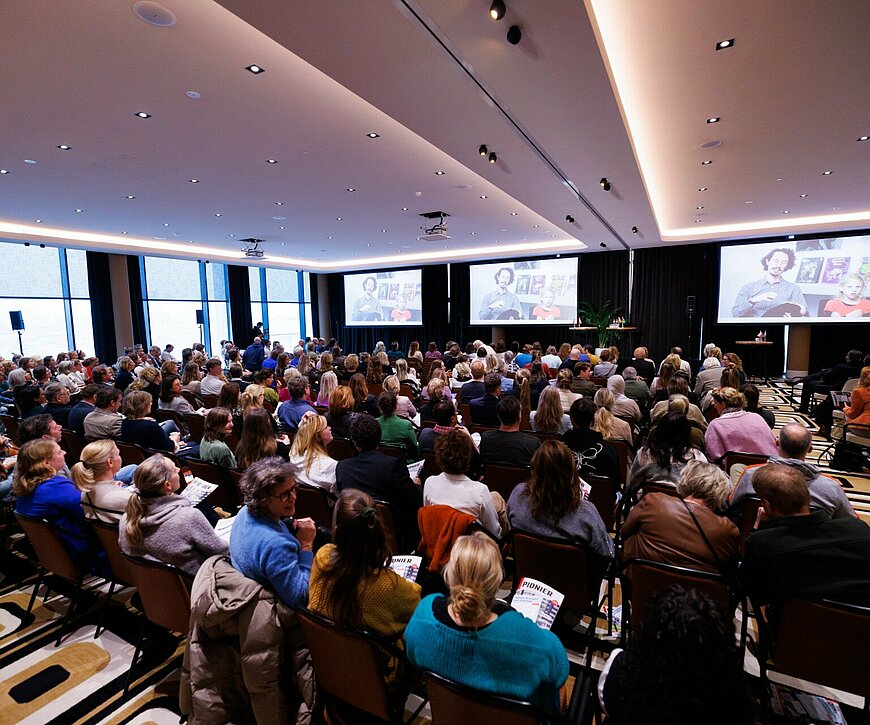
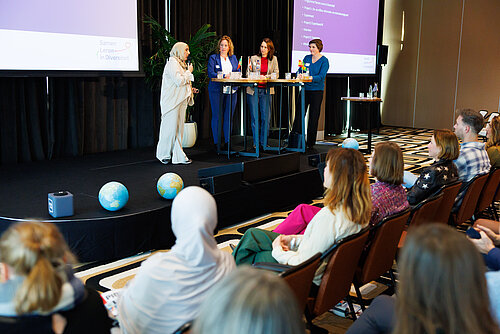
More and more children with an international background are attending school in the Brainport region. And that number will continue to rise in the coming years. During the Grenzeloos Goed Onderwijs (Borderless Good Education) conference, more than 330 education professionals, policymakers and business people came together to discuss how we can best support these children. What are the opportunities and challenges surrounding the internationalisation of education? And how can we strengthen each other?
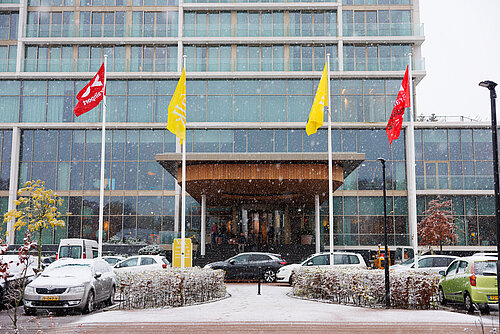
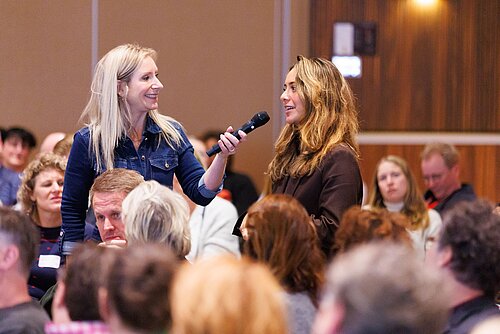
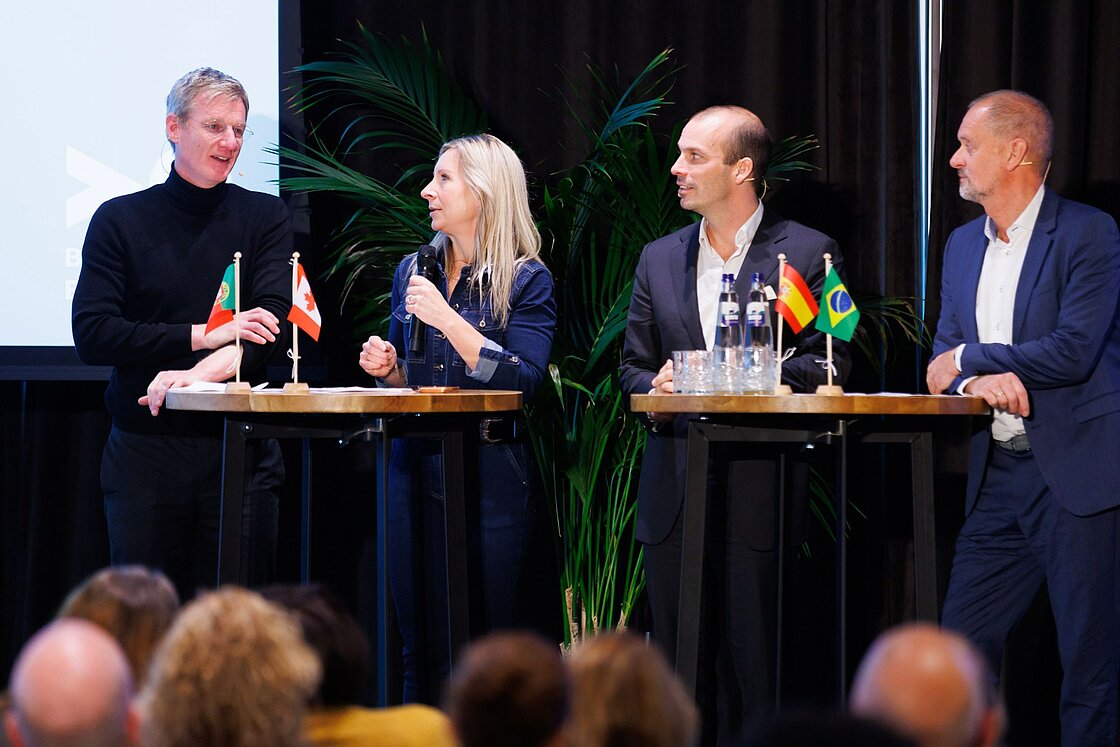
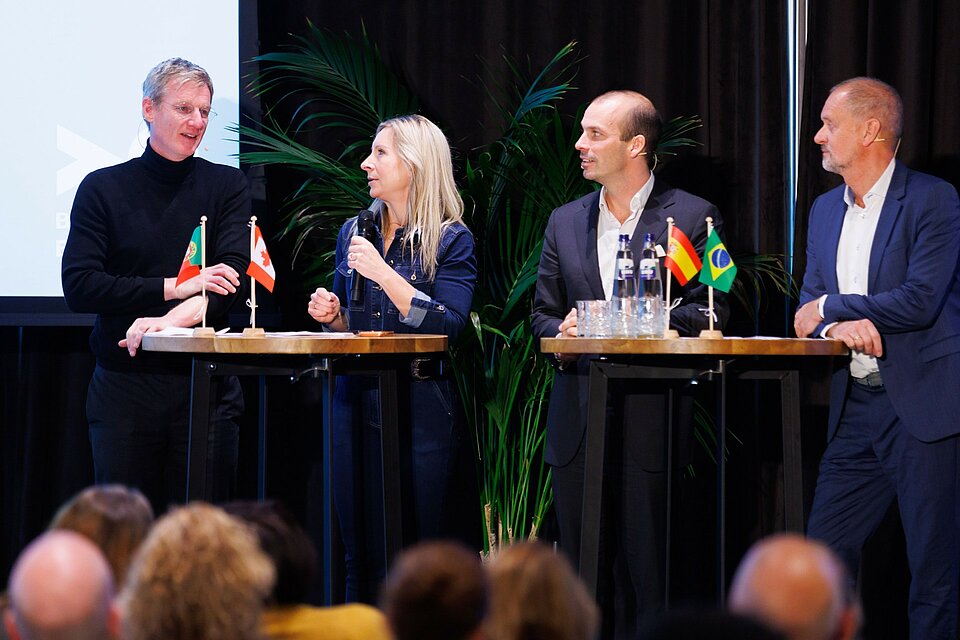
‘It is important that every child feels welcome in the classroom, regardless of their background,’ said moderator Meike de Jong as she kicked off the conference at Van der Valk Eindhoven-Best. “We face the challenge of adapting our education system to this.” With these words, she neatly summarises the essence of this afternoon. Internationalisation brings challenges, such as greater cultural diversity in the classroom. However, internationalisation also offers opportunities, as Véronique Zeeman, alderwoman for the municipality of Best, points out in her speech. “Working with people from other cultures has personally enriched me enormously.” She emphasised the importance of collaboration, so that the challenges do not overshadow the opportunities. “Municipalities, education and the business community: we need each other. Together, we can be even more meaningful."

Looking beyond your own boundaries
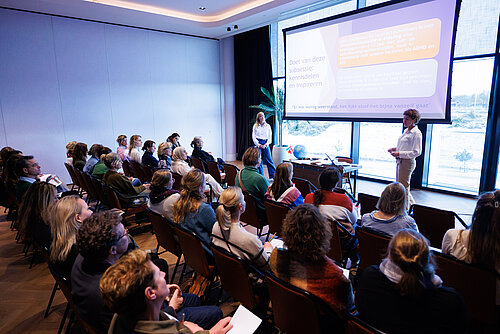
After the kick-off, attendees split up into groups for various workshops. Yvonne van Haalen, a primary school teacher at De Wilakkers in Eindhoven, takes part in the session on pre-school education. ‘What I particularly like is that multilingualism and cultural awareness are also receiving more and more attention in the pre-school period. I also think it's good to start early. Only then can we all put together the puzzle for that one little person who will be standing in front of us tomorrow.’ Internationalisation and multilingualism have long played an important role at her school. ‘But I also see education professionals here who are just starting out. We can learn from each other. Multilingualism demands something of us as teachers: daring to look beyond our own frameworks, being curious about others and daring to reflect on ourselves. Everyone here has taken that message on board.’
Multilingualism is everywhere
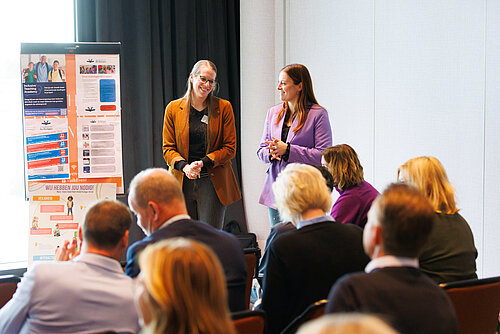
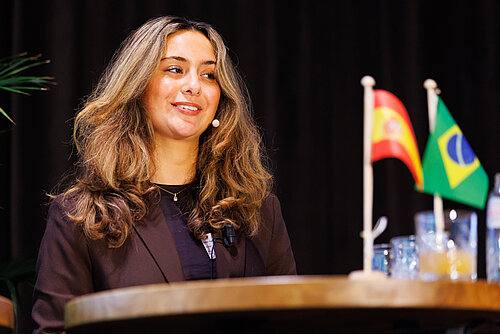
A few doors down, Rianne Thomas, teacher, language coordinator and multilingualism director at Pius X College in Bladel, tells her story. She tells the education professionals present about the course she is taking, “The inclusive and multilingual learning environment”. “This course (offered through the Inclusive Teaching Academy) has given me deeper insight and knowledge that I can use with both multilingual and Dutch-speaking children,” she says. 'Multilingualism is not only present at international schools. It is more common than you think. Be aware of that,' she says. Not much later, Lina (15), who comes from China, illustrates why internationalisation should be on the agenda in education. ‘There are major differences between Dutch and Chinese education. In China, for example, the teacher takes centre stage, while in the Netherlands there is a lot of interaction with pupils. In China, I also went to school from 7:30 in the morning until 10:30 at night. Those differences take a lot of getting used to, and that's exciting at first. If you understand that as a teacher, you're already well on your way.’
Trauma-sensitive working
After a second round of workshops, Nanouk Teensma, director of the Jenaplan school Het Mooiste Blauw in Nuenen, walks towards the main hall for the joint closing ceremony. She says: 'I was particularly interested in the workshop on trauma-sensitive working. It turned out to be very interesting, with concrete tips. At our school, we don't have many international children who may have experienced war trauma. But there are plenty of pupils who have been through something traumatic, such as a divorce. Instead of talking about it, it often remains behind closed doors.' Such trauma can manifest itself in “difficult” behaviour on the part of a pupil. The workshop therefore focuses on one key message: a difficult pupil is a pupil who is having a hard time. To experience this for themselves, the participants are each given a balloon, close their eyes and wait to see which one will be popped. The feeling of tension is what these pupils always have to contend with. “Intense, but good for raising awareness,” concludes Nanouk.
Tackling challenges together
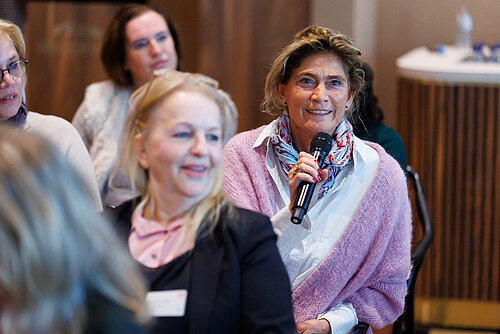
In addition to education professionals from primary, secondary and vocational education, higher professional education is also represented at the conference, as becomes apparent during the closing networking drinks reception. Marcel Lemmen, member of the Executive Board of Hogeschool de Kempel: 'I am here to keep an eye on educational developments in the Brainport region, so that we as a teacher training college can keep up. This applies to our curriculum for trainee teachers, but also to current or new teachers whom we support in their professional development. Today, I have seen that we face a major challenge, but that we are all willing to take it on together. Education professionals engage in dialogue with each other, are curious about each other and come up with good ideas. That makes me feel positive. For that reason alone, it is good that a conference such as Grenzeloos Goed Onderwijs exists.'
Boundless Good Education by Berfin Yurdakul
Brainport offers a place where the past and future come together, and everyone feels at home. In this region, schools strive to offer children more than just knowledge: a safe environment where they can grow, discover themselves and feel at home.
Brainport is growing rapidly, which brings both opportunities and challenges. How do we ensure that connections are maintained in a diverse community? Diversity is not an obstacle, but a strength. New languages and cultures enrich the region, provided we remain curious and learn from each other.